

How to Jumpstart a Car: A Step-by-Step Guide for Beginners
A dead car battery is one of those things that always seems to happen at the worst possible time. The good news is, you don’t need to call a mechanic or wait for help. Once you know how to jumpstart a car, it’s actually a simple and practical skill that can get you back on the road quickly.
What is “Jumpstarting a Car?”
Jumpstarting a car means using power from another vehicle’s battery to start your car when its battery is dead. Once your engine is running again, the alternator begins recharging the battery.
What You Need to Jumpstart a Car
Before you begin, make sure you have a few basic things ready:
- Jumper cables
- A working car with a fully charged battery
- Safety gloves (optional, but a good idea)
 Step-by-Step Guide to Jumpstart a Car
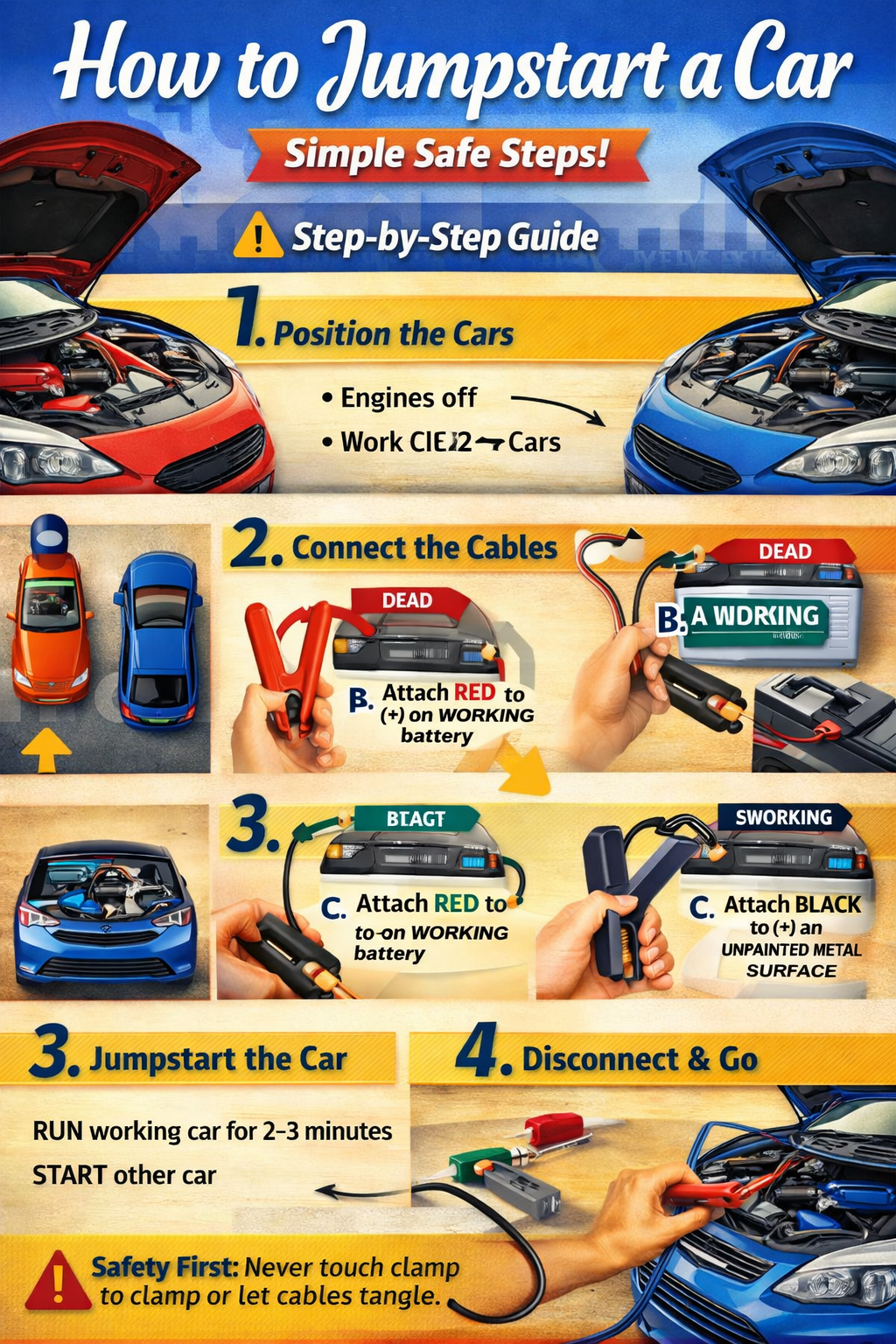
Step 1: Position Both Cars Safely
- Park the working car close to the car with the dead battery
- Turn off both engines
- Engage the parking brakes
Step 2: Locate the Batteries
- Open the hoods and find the battery terminals
- Identify the positive (+) and negative (-) terminals
Step 3: Connect the Jumper Cables
Follow the correct order carefully:
- Connect the red clamp to the dead battery (+)
- Connect the other red clamp to the working battery (+)
- Connect the black clamp to the working battery (-)
- Attach the final black clamp to an unpainted metal surface on the dead car (not the battery)
Step 4: Start the Working Car
- Let it run for about 2–5 minutes
- This allows power to flow into the dead battery
Step 5: Start the Dead Car
- Try starting the car
- If it doesn’t start, wait a few more minutes and try again
Step 6: Remove the Cables (Reverse Order)
Once the car starts:
- Remove the black clamp from the metal surface
- Remove the black clamp from the working battery
- Remove the red clamp from the working battery
- Remove the red clamp from your car
Step 7: Let the Car Run
- Keep the engine running for 15–30 minutes
- This helps recharge the battery properly
 Safety Tips You Shouldn’t Ignore
- Never let the clamps touch each other
- Don’t connect the black clamp to the dead battery terminal
- Avoid sparks near the battery
- Check for any visible battery damage before starting
 Common Mistakes to Avoid
- Connecting cables in the wrong order
- Using damaged or worn-out jumper cables
- Trying to jump a completely dead or faulty battery
- Turning off the engine immediately after starting
When Jumpstarting Doesn’t Work
If your car still won’t start, the issue could be:
- A completely dead battery
- A faulty alternator
- A bad starter motor
In these cases, it’s best to get professional help.
Pro Tip
Keep a set of jumper cables in your car at all times. It’s one of those things you might not need often—but when you do, you’ll be glad you have it.
Final Thoughts
Knowing how to jumpstart a car is a small skill that can make a big difference. It’s quick to learn, easy to do, and can save you from being stuck in a stressful situation.
Next time your battery dies, you’ll know exactly what to do—no stress, no guesswork.

