

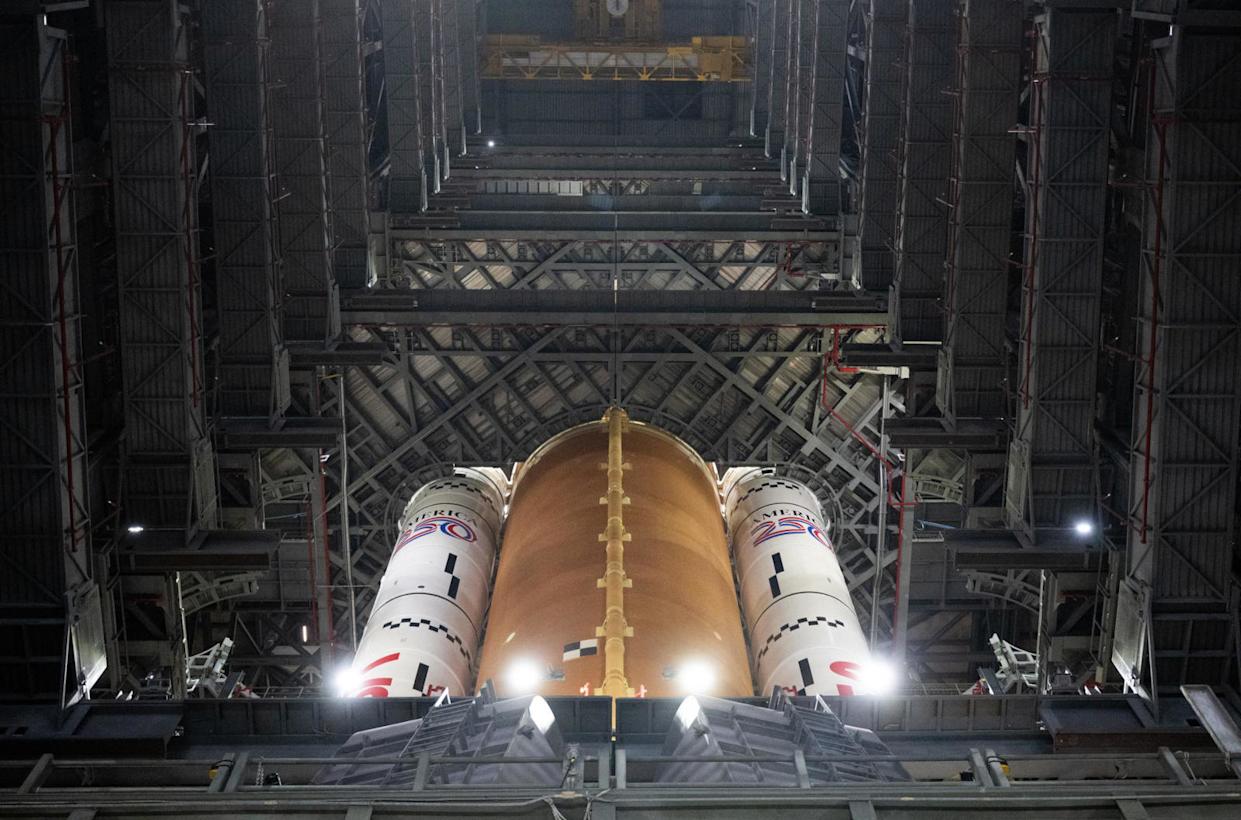
The organisation is aiming for the month of February as the debut date for Artemis 2.
In 2024, the National Aeronautics and Space Administration (NASA) made the announcement that the Artemis 2 mission will be delayed until April 2026. After further investigation, the agency has stated that it may begin operations as early as February, with the first flying opportunity scheduled for February 6th. Both the Space Launch System (SLS) rocket and the Orion spacecraft will shortly be transported to their respective launch pads at the Kennedy Space Centre in Florida. The National Aeronautics and Space Administration (NASA) is presently in the process of making the final preparations for the mission. From the assembly building to Launch Pad 39B, the spacecraft system will travel a distance of four miles, which might take up to twelve hours to complete. The National Aeronautics and Space Administration (NASA) is aiming for a date that is no earlier than January 17, with the specific day being contingent on the weather and the potential requirement for additional time to handle technical concerns.
Since the Apollo program successfully completed its last mission to the moon in 1972, Artemis 2 is the first crewed mission to the moon. During the ten-day journey, there will be four astronauts on board who will be evaluating whether or not the key life support systems of Orion are capable of supporting human passengers on future missions that last for longer periods of time. First, they will complete two orbits around the Earth, and then by the time they reach the far side of the moon, they will have travelled 4,700 miles. At the end of January, NASA plans to carry out a wet dress rehearsal in the event that the Space Launch System (SLS) and the Orion system are implemented as planned. For the purpose of getting ready for the actual event, the agency will load cryogenic propellants into the rocket and will perform a full launch countdown while the rehearsal is taking place.
