

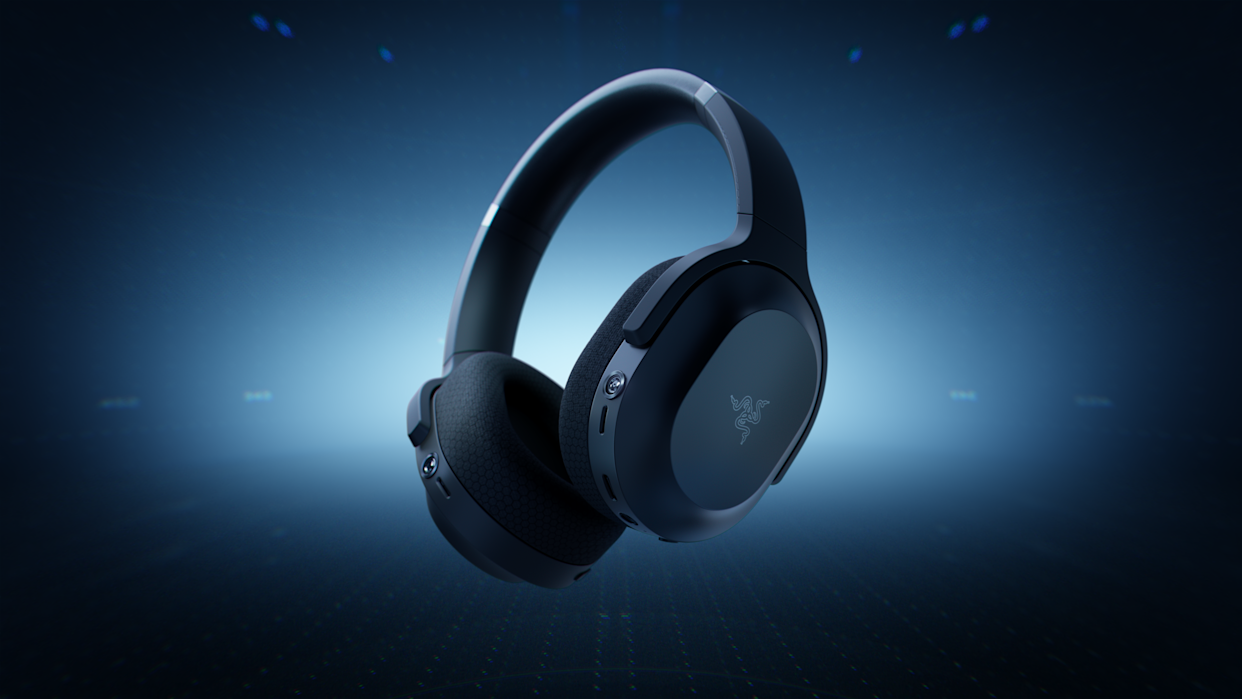
It is only going to be available at CES; there will be no commercial release of the device.
On the floor of the Consumer Electronics Show (CES), we see a lot of completely outlandish concepts, and this year, Razer brought in a concept piece that they called Project Motoko. This product is Razer's attempt to blur the boundaries between a gaming headset and an artificial intelligence-powered wearable that can be used in everyday life. There is also the possibility that it is a means for fans of Ghost in the Shell to feel insulted by Razer's use of The Major's name in a manner that is not appropriate.
Project Motoko is driven by Snapdragon platforms, which are manufactured by Qualcomm. There are two first-person view cameras included into the headgear, and they are positioned at eye level. These cameras are capable of providing real-time object and text identification. It also has a wide field of focus, which allows it to capture things that are occurring outside the average human eye's peripheral vision, and its microphone array is designed to capture both close and far-off sounds.
Within the press release that was issued regarding the device, Nick Bourne, who is the global head of mobile console division for Razer, stated that "Project Motoko is more than a concept; it's a vision for the future of artificial intelligence and wearable computing." Through a collaborative effort with Qualcomm Technologies, we are developing a platform that not only improves gameplay but also revolutionizes the way technology is integrated into various aspects of daily life. "This is the next frontier for experiences that are completely immersive."
In addition to being able to take in ambient details, Project Motoko is also capable of functioning as a wearable artificial intelligence assistant, and the model is compatible with a variety of individual chatbots. That it is able to integrate with Grok, OpenAI, and Gemini was mentioned in the news release that the business sent. Due to the fact that Project Motoko is a concept item, Razer does not intend to distribute this headset for commercial use. However, one of the most exciting aspects of the Consumer Electronics Show is the opportunity to view these more experimental ideas. Furthermore, Razer is well-known for being a brand that caters to serious gamers. Therefore, it is exciting to see the firm exploring the possibility of developing an artificial intelligence wearable that could appeal to a wider audience, even if it is still a geeky audience.
