• Download and Watch without watermark videos -- (HERE)

  • Download Indiasocialbook Android Native App (HERE)

Over 2 Million Devices Infected by Kimwolf Android Botnet via ADB and Proxy Networks


Synthient found that Kimwolf tunneled through home proxy networks to infect over 2 million Android devices.

"Key actors involved in the Kimwolf botnet are observed monetizing the botnet through app installs, selling residential proxy bandwidth, and selling its DDoS functionality," the company claimed last week.

Last month, QiAnXin XLab revealed Kimwolf's ties to AISURU. Kimwolf, an Android AISURU version, has been active since August 2025. Recent evidence suggests the botnet was behind a number of record-setting DDoS attacks late last year.

Malware uses infected systems to send malicious traffic and launch large-scale DDoS attacks. Most infections occur in Vietnam, Brazil, India, and Saudi Arabia, with Synthient observing 12 million distinct IP addresses per week.

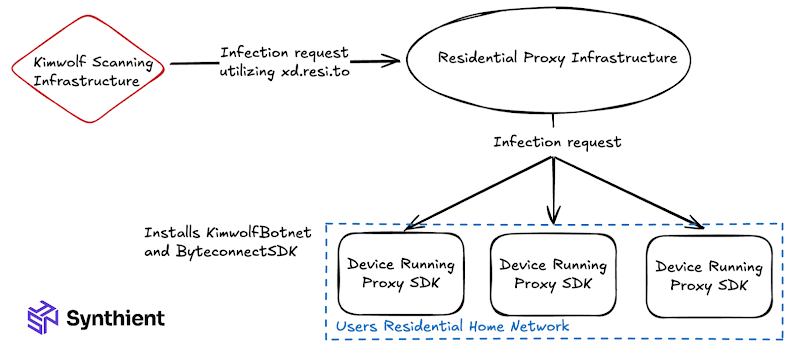
Botnet attacks mostly target Android devices with an exposed Android Debug Bridge (ADB) service utilizing a scanning infrastructure that leverages residential proxies to install malware. At least 67% of botnet devices are unauthenticated and have ADB enabled by default.

Proxy providers may pre-infect these devices with SDKs to secretly join the botnet. Unofficial Android smart TVs and set-top boxes are the most compromised.
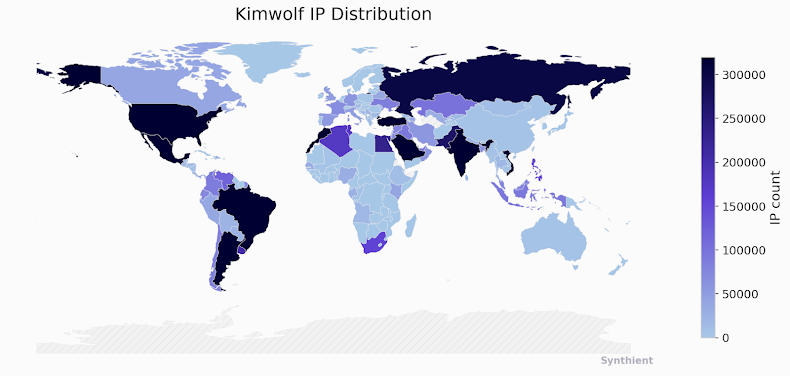


Using proxy IP addresses that were made available for rent by China-based IPIDEA, which had applied a security patch on December 27 to limit access to local network devices and numerous vulnerable ports, Kimwolf infections had been exploited as recently as December 2025. According to IPIDEA, it is the "world's leading provider of IP proxy" since it has more than 6.1 million IP addresses that are updated every day and 69,000 IP addresses that are added every day.

To put it another way, the method of operation is to make use of IPIDEA's proxy network as well as other proxy providers, and then to tunnel through the local networks of systems that are running the proxy software in order to drop the virus. In order to accept additional commands, the primary payload is configured to listen on port 40860 and establish a connection to 85.234.91[.]247:1337.


"The scale of this vulnerability was unprecedented, exposing millions of devices to attacks," according to Synthient Technologies.

In addition, the attacks infect the devices with a bandwidth monetization service known as Plainproxies Byteconnect SDK, which is an indication of broader attempts to monetize the devices. The Software Development Kit (SDK) makes use of 119 relay servers, which are responsible for receiving proxy duties from a command-and-control server. These tasks are subsequently carried out by affected devices.

According to Synthient, the company has identified the infrastructure that is being utilized to carry out credential-stuffing attacks that are directed against IMAP servers and major websites on the internet.

"Kimwolf's monetization strategy became apparent early on through its aggressive sale of residential proxies," the business stated in its announcement. "By offering proxies as low as 0.20 cents per GB or $1.4K a month for unlimited bandwidth, it would gain early adoption by several proxy providers."

"The discovery of pre-infected TV boxes and the monetization of these bots through secondary SDKs like Byteconnect indicates a deepening relationship between threat actors and commercial proxy providers."

It is advised that proxy providers restrict queries to RFC 1918 addresses, which are Private Internet Protocol address ranges that are defined for usage in private networks. This is done in order to mitigate the risk. In order to avoid unwanted access, it is recommended that organizations securely lock down any devices that are running unauthenticated ADB shells.

Russian Hackers Target Ukrainian Military and Government on Viber


Viber messaging platform has been used by the Russia-aligned threat actor known as UAC-0184 to distribute malicious ZIP archives to Ukrainian military and government entities. This threat actor has been spotted targeting Ukrainian military and government entities.

"This organization has continued to conduct high-intensity intelligence gathering activities against Ukrainian military and government departments in 2025," the 360 Threat Intelligence Center stated in a technical assessment. " These activities have been ongoing since 2025."

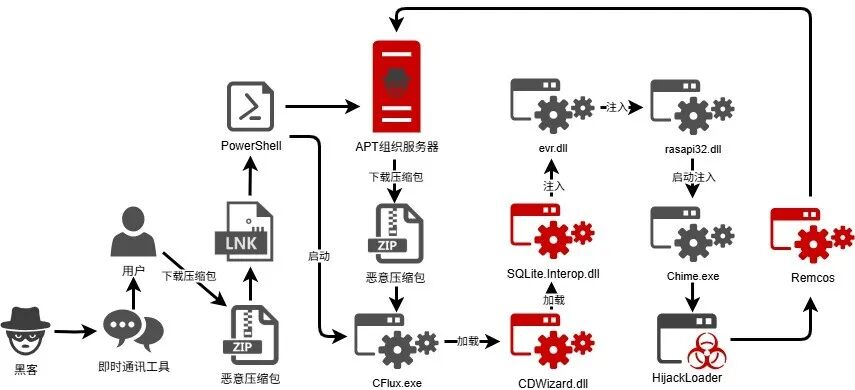
The hacker gang, which is also known as Hive0156, is most recognized for its use of war-themed baits in phishing emails in order to deploy Hijack Loader in attacks that are directed against Ukrainian entities. Following that, the malware loader functions as a conduit for infections caused by Remcos RAT.

At the beginning of January 2024, CERT-UA was the first organization to document the threat actor. It has been discovered that subsequent assault campaigns make use of messaging applications such as Signal and Telegram as mediums for the distribution of malicious software. This strategy appears to have undergone additional development, according to the most recent findings from the Chinese security system vendor.

Viber is used as the initial intrusion vector in the attack chain, which consists of the distribution of malicious ZIP archives that contain several Windows shortcut (LNK) files that are disguised as authentic Microsoft Word and Excel documents in order to deceive recipients into opening them.

At the same time as Hijack Loader is being secretly executed in the background by retrieving a second ZIP package (named "smoothieks.zip") from a remote site using a PowerShell script, the LNK files are designed to send a fake document to the victim in order to reduce their level of suspicion.


By employing methods such as DLL side-loading and module stomping, the assault is able to circumvent detection by security solutions. This is accomplished through a multi-stage process that involves the reconstruction and deployment of Hijack Loader in memory. After that, the loader performs a search for installed security software in the environment. This search includes software associated with Kaspersky, Avast, BitDefender, AVG, Emsisoft, Webroot, and Microsoft. The loader does this by computing the CRC32 hash of the application that corresponds to the malware.

In addition to establishing persistence through the use of scheduled processes, the loader takes measures to circumvent static signature detection before secretly executing Remcos RAT by injecting it into "chime.exe." Attackers are granted the power to manage the endpoint, run payloads, monitor activity, and steal data through the use of the remote administration tool.

"Although marketed as legitimate system management software, its powerful intrusive capabilities make it frequently used by various malicious attackers for cyber espionage and data theft activities," according to the 360 Threat Intelligence Center's statement. "Through the graphical user interface (GUI) control panel provided by Remcos, attackers can perform batch automated management or precise manual interactive operations on the victim's host."

Meta's EMG bracelet goes beyond AR glasses


For many years, Meta has been conducting research and development on EMG technology. The technology was initially made available to the public in 2025 by the firm in the form of its Meta Ray-Ban Display glasses. These glasses allow users to control them through the use of a specialized neural band that is able to recognize even the most minute muscle movements in the wrist.

Now, at the Consumer Electronics Show 2026 (CES 2026), the business is now providing its first glimpse at how its neural band could be utilized to manage gadgets that are not part of its smart glasses range. In order to investigate a number of exciting applications for its wrist-based controller, Meta has formed a partnership with Garmin, in addition to a few other research partnership organizations.

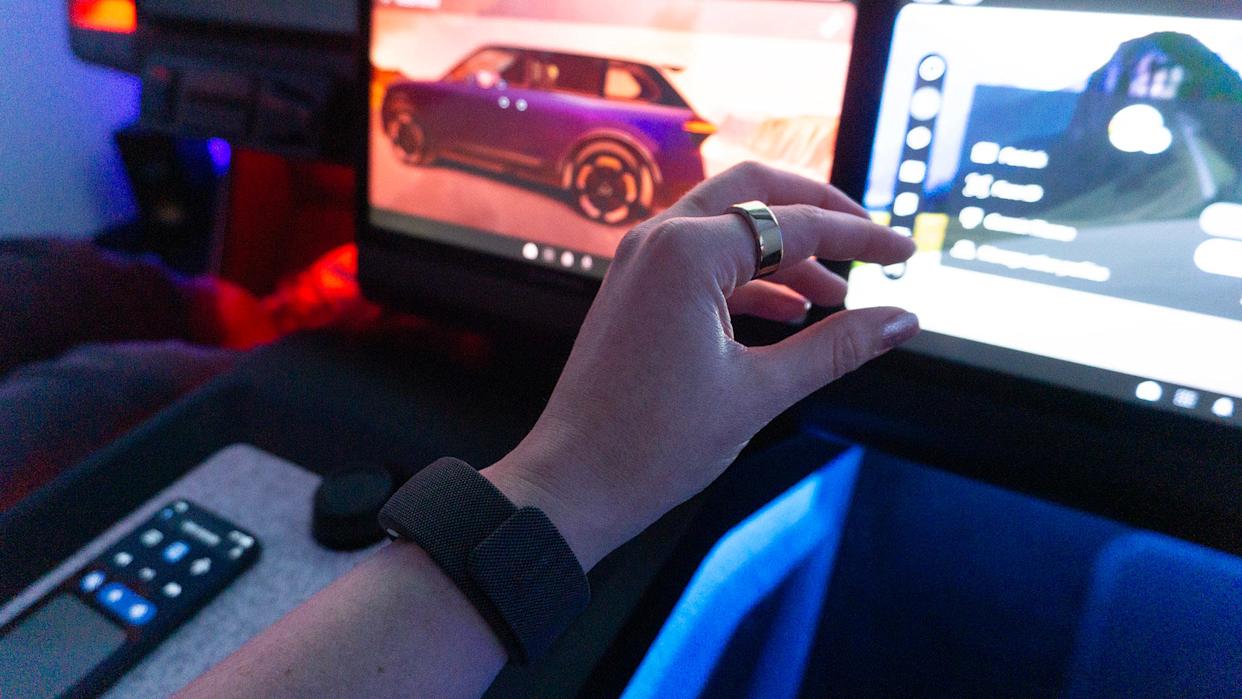
Formerly, the social media firm collaborated with Garmin on the development of fitness features for the company's spectacles. At the Consumer Electronics Show (CES), however, the businesses displayed a very preliminary demonstration of how Meta's neural band may be used to manage the built-in entertainment system of a vehicle.

The experience is a component of Garmin's "Unified Cabin" idea, which investigates a variety of in-car experiences that are centered on artificial intelligence. While wearing a neural band, I was able to navigate two apps on a touchscreen display in Garmin's cockpit configuration. The demo I tried was pretty limited in its capabilities. I was able to modify an on-screen model of an automobile by using pinch and swipe movements in one of them. This was quite similar to how I would use the band to zoom in and out of an image while wearing the display glasses. It was a game of 2048 that was the second demo, which was pretty peculiar. For the purpose of rearranging the tiles, I utilized the identical swipe gestures.

Neither of these are the kinds of experiences that come to mind when you think of "in-car entertainment," but Garmin, a company that collaborates with a number of major automobile manufacturers on infotainment systems, appears to be considering some more practical use cases as well. I was informed by the firm that it intends to investigate the possibility of utilizing the neural band to control operations of the vehicle, such as unlocking doors or rolling down windows.

In addition, Meta has announced that it would be collaborating with the University of Utah on a research project that will investigate the ways in which its electromyography (EMG) technology can be utilized to assist individuals who suffer from disorders such as amyotrophic lateral sclerosis (ALS), muscular dystrophy, and other conditions that impact their ability to use their hands.

The neural band will be used by researchers in collaboration with Meta to test movements that could enable consumers to control smart speakers, blinds, thermostats, locks, and other household gadgets. According to a blog post published by the firm, "Meta Neural Band is sensitive enough to detect subtle muscle activity in the wrist — even for people who are unable to move their hands." The researchers will also investigate the possibility of utilizing the band for mobility use cases, such as the TetraSki program at the University of Utah, which aids users in skiing by utilizing a joystick or a mouth-based controller at the present time.

Meta delayed its international display glasses launch


According to the company, the explanation could be attributed to "unprecedented demand and limited inventory."​


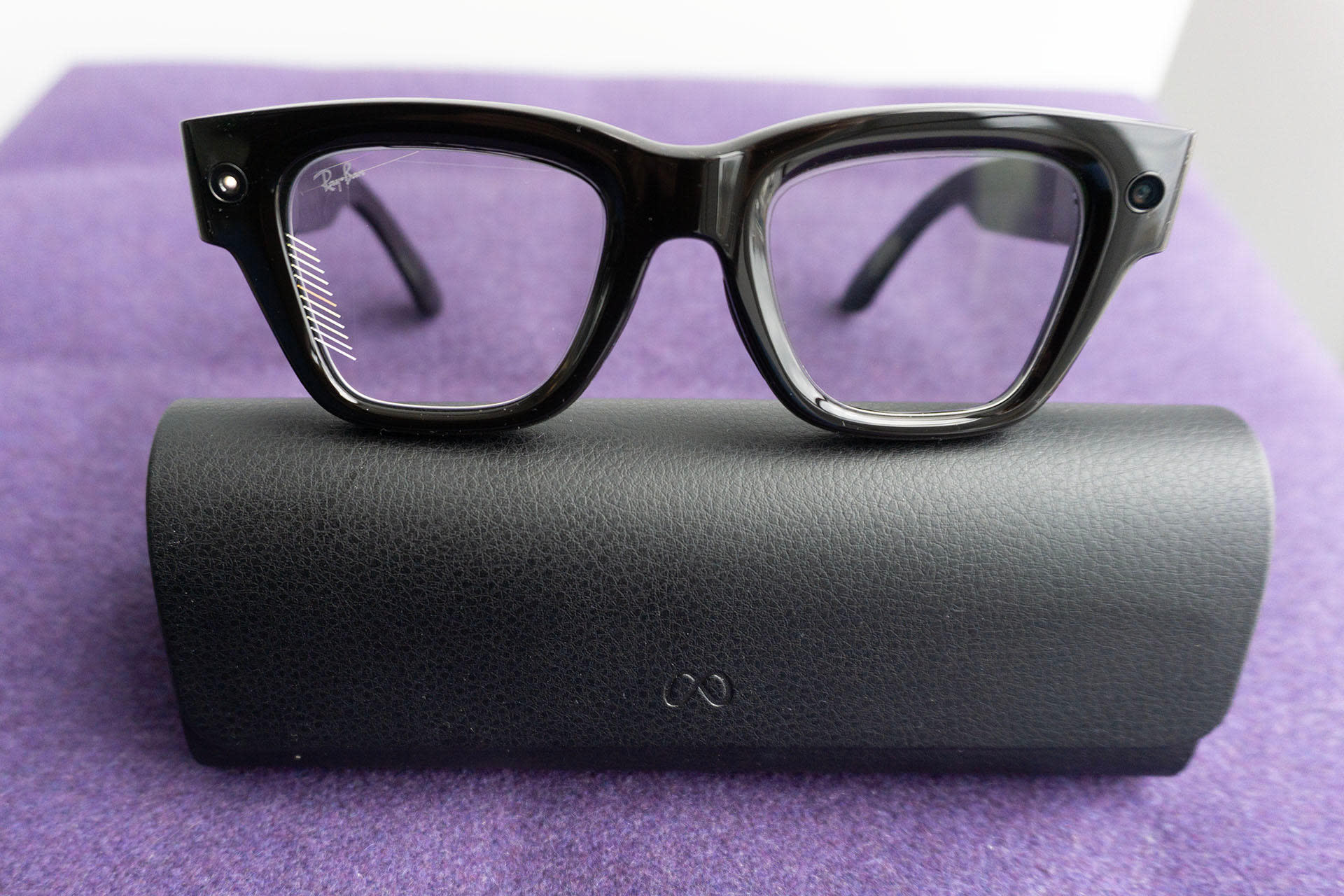
As a result of "unprecedented demand and limited inventory," Meta has decided to halt the distribution of its Ray-Ban Display smart glasses in the United Kingdom, France, Italy, and Canada, as the firm announced on Monday at the Consumer Electronics Show 2026. The expansion, which was initially scheduled to take place at the beginning of 2026, has not been rescheduled. "We'll continue to focus on fulfilling orders in the US while we re-evaluate our approach to international availability," Meta stated in an article on its website.

The acquisition of Meta's display glasses has been difficult ever since they were originally made available for purchase. It is not possible to purchase them online; rather, they are only accessible in a few number of retail shops in the United States, such as certain Ray-Ban, Sunglass Hut, LensCrafters, and Best Buy locations. You will need to make an appointment for a demonstration at one of those stores on the website of Meta in order to purchase them. Before the debut, Meta stated that it had observed "strong" demand for demonstrations, with places being reserved in advance for a number of weeks.

Considering that the corporation anticipated that the number of purchasing alternatives would "expand" the longer they were on sale, there was confidence that the availability would improve. Nevertheless, it would appear that the corporation is still experiencing a mismatch between supply and demand, as seen by the postponement of the first scheduled international launch.

It costs $799 for Meta. The Ray-Ban Display glasses are the company's first to integrate a heads-up display. In addition, they come with a camera, dual speakers, six microphones, WiFi 6, and a Neural Band controller that can track your finger. Karissa Bell, a senior reporter for Indiasocialbook, mentioned in her review that the Ray-Ban display "enables wearers to do much more than what's currently possible with [other] Ray-Ban or Oakley models." This is, of course, assuming that you don't mind the appearance of the huge, chunky frames.

Razer's Project Motoko prototype gaming headgear acts as an AI wearable


It is only going to be available at CES; there will be no commercial release of the device.​


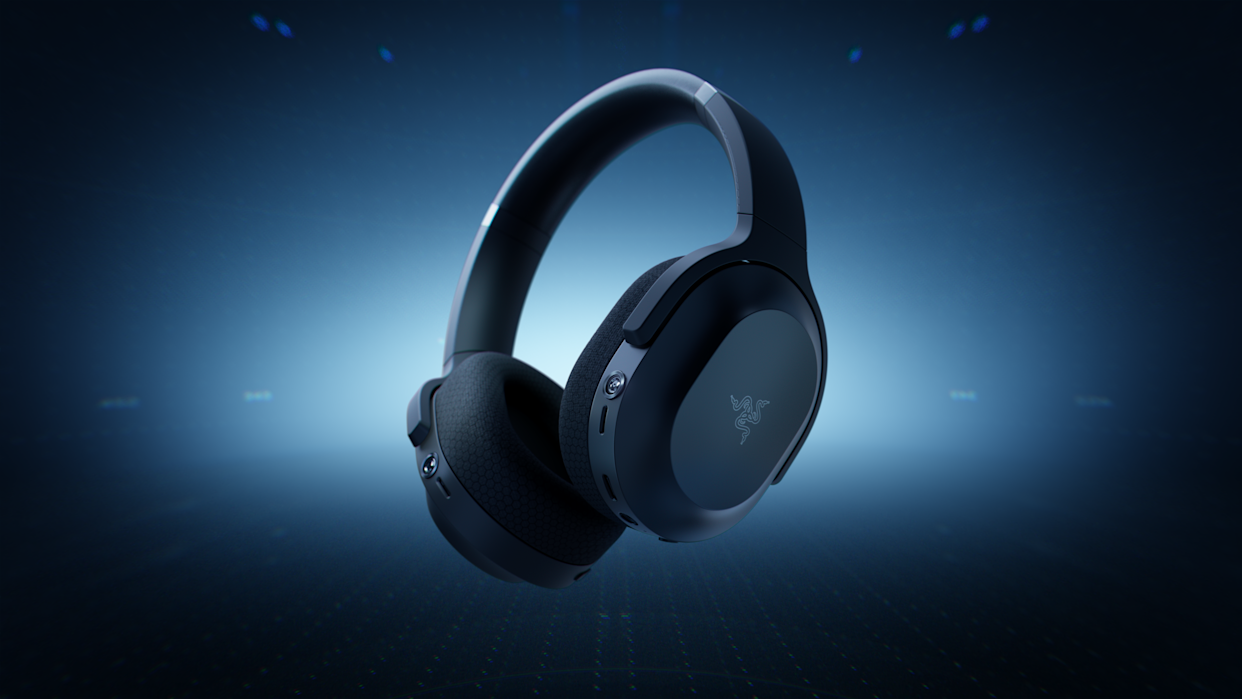
On the floor of the Consumer Electronics Show (CES), we see a lot of completely outlandish concepts, and this year, Razer brought in a concept piece that they called Project Motoko. This product is Razer's attempt to blur the boundaries between a gaming headset and an artificial intelligence-powered wearable that can be used in everyday life. There is also the possibility that it is a means for fans of Ghost in the Shell to feel insulted by Razer's use of The Major's name in a manner that is not appropriate.

Project Motoko is driven by Snapdragon platforms, which are manufactured by Qualcomm. There are two first-person view cameras included into the headgear, and they are positioned at eye level. These cameras are capable of providing real-time object and text identification. It also has a wide field of focus, which allows it to capture things that are occurring outside the average human eye's peripheral vision, and its microphone array is designed to capture both close and far-off sounds.

Within the press release that was issued regarding the device, Nick Bourne, who is the global head of mobile console division for Razer, stated that "Project Motoko is more than a concept; it's a vision for the future of artificial intelligence and wearable computing." Through a collaborative effort with Qualcomm Technologies, we are developing a platform that not only improves gameplay but also revolutionizes the way technology is integrated into various aspects of daily life. "This is the next frontier for experiences that are completely immersive."

In addition to being able to take in ambient details, Project Motoko is also capable of functioning as a wearable artificial intelligence assistant, and the model is compatible with a variety of individual chatbots. That it is able to integrate with Grok, OpenAI, and Gemini was mentioned in the news release that the business sent. Due to the fact that Project Motoko is a concept item, Razer does not intend to distribute this headset for commercial use. However, one of the most exciting aspects of the Consumer Electronics Show is the opportunity to view these more experimental ideas. Furthermore, Razer is well-known for being a brand that caters to serious gamers. Therefore, it is exciting to see the firm exploring the possibility of developing an artificial intelligence wearable that could appeal to a wider audience, even if it is still a geeky audience.

G-Sync Pulsar reduces motion blur for gamers


An announcement on the G-Sync Pulsar technology was made by the business at the CES 2026.​


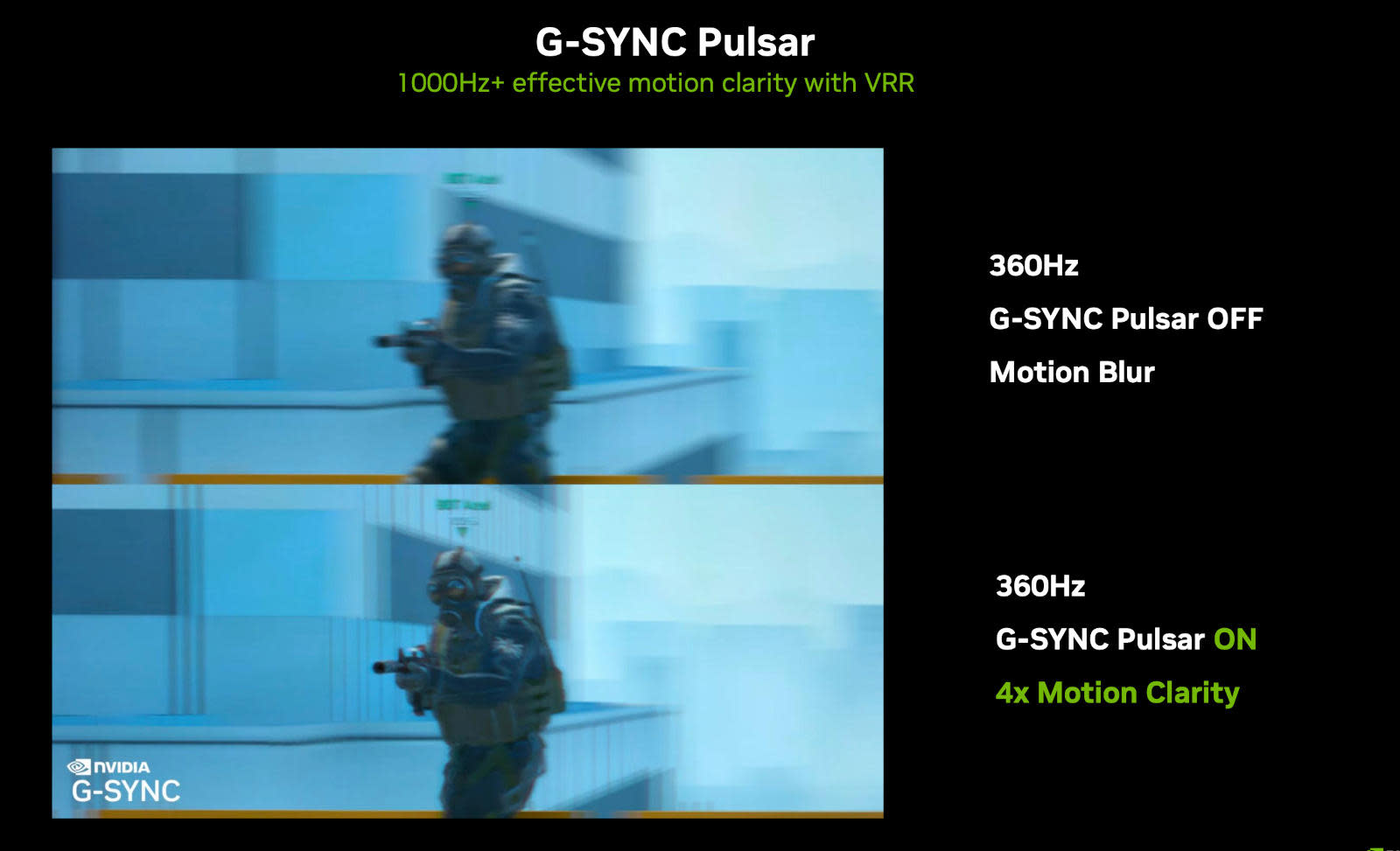
It was at the Consumer Electronics Show (CES) 2026 when NVIDIA introduced the G-Sync Pulsar, which the company describes as the "latest evolution of [its] pioneering VRR (variable refresh rate) technology." The new technology promises to deliver a gaming experience that is devoid of stuttering and has animation that is buttery smooth. This is made possible by pulsating the illumination of the display. In contrast to conventional displays, which have a backlight that is always on, G-Sync Pulsar displays include numerous horizontal backlight areas that are pulsed individually from top to bottom. As the backlight remains on at all times, the image gradually becomes less distinct from one frame to the next. The displays that are equipped with the new technology allow pixels in a frame sufficient time to stabilize before they are illuminated. This ensures that the pixels are displayed in the appropriate locations, which effectively reduces motion blur that is caused by the monitor.

According to the manufacturer, G-Sync Pulsar has the potential to virtually triple your refresh rate. It is possible for it to give a perceived effective motion clarity of more than 1,000 Hz if you are playing at a frame rate of 250 frames per second. Due to the fact that this makes tracking and shooting in-game much simpler, displays that use this technology are particularly well-suited for use in esports. In the video that follows, you will be able to observe the difference in motion in Counter-Strike 2 between a 360Hz display that does not have G-Sync Pulsar and one that has the technology turned on.


Beginning on January 7, users will be able to purchase the first four displays that have been specifically developed to feature G-Sync Pulsar and Ambient Adaptive Technology. This technology enables users to automatically alter color temperature and brightness according on the lighting conditions prevailing in the surrounding environment. Acer, AOC, ASUS, and MSI are all going to release a 27-inch IPS panel that measures 2,560 × 1,440 pixels. This display will come equipped with a refresh rate of 360Hz and a peak brightness of 500 nits in high dynamic range (HDR).

Sexy Indian Horny Punjabi Girl Bj Fingering Hard Fucking Screaming Moaning Old+New

Filter