• Download and Watch without watermark videos -- (HERE)

  • Download Indiasocialbook Android Native App (HERE)

Netflix now has dialogue-only subtitles


Aren't you supposed to read this in a FRIENDLY voice?​


Netflix is adding a new type of subtitles. With the start of the fifth season of the psychological thriller You, they will offer dialog-only captions in addition to the usual subtitles for the deaf and hard of hearing (SDH/CC).

To clarify: SDH/CC subtitles do not only transcribe dialog, but also include sound descriptions such as [alarm rings], [knock on door], or [Don't Stop Believing intensifies over the jukebox]. The new Netflix option will eliminate these non-dialog audio cues.

The dialog-only subtitles are accessible from Netflix's language picker under "English" (SDH/CC subtitles will still be tagged as "English (CC)"). The company has stated that all upcoming Netflix originals available in SDH/CC languages will include the new format, beginning with season five of You.

Meta finally admits it has a big spam issue on Facebook


This company does not say it uses AI for sending spam.​


Meta is working on fixing that. This is the basic message that the company sent in its update, where it admits that Facebook has too many spammy posts on the platform. In the update, the company writes that Facebook Feed isn’t always showing new and interesting posts that you want to see and enjoy. We are working on it. The company plans to “crack down” on the worst offenders. At the same time, Meta says it will reduce the reach of creators who post “long, distracting captions” and posts with unrelated or irrelevant captions. These accounts are no longer eligible for monetization. The company is taking “more aggressive” action against “spam networks that coordinate fake engagement,” including making the comments of these accounts less visible, removing Facebook pages that are “designed to inflate reach.” Meta is testing a feature that will allow users to anonymously downvote comments to label them as not “useful.” It is worth noting that Meta is continuing its efforts to make Facebook more attractive to “young adults” as the update was released. As part of their new attempt, the company has brought back a tab for friends’ content, a move that Mark Zuckerberg said made the platform more like “OG Facebook.” It’s also worth noting that Meta didn’t mention anything about the more persistent type of engagement bait that has emerged on Facebook throughout the last year. But one of the bigger persistent forms of engagement bait that has been plaguing Facebook over the last year is AI slop. This is the phenomenon, documented at length by the crew at 404 Media, that involves the circulation of bizarre, often nonsensical AI-generated images — such as the infamous “Shrimp Jesus” — that do nothing so much as drive engagement for people trying to make money on or off Facebook. What’s more, these spammers are often assisted in their efforts by Facebook’s own algorithm, which promotes the posts, researchers have determined. Engagement bait and AI slop aren’t the only types of low-quality content that has inundated users’ Facebook feeds in recent years. I see posts from pages that simply seem to screenshot old Reddit posts from r/AITA or rehash celebrity news stories about people I don’t follow or have any interest in on a regular basis. Most of the viral content on the platform is actually mundane and formulaic, designed to get millions of comments via requests to “amen” or solve simple math — something Meta might not be able to squeeze into its latest crackdown, but also isn’t necessarily the content that many Facebook users are actually enjoying. The company does acknowledge that it’s also trying to “uplift” the creators who are actually sharing original content by taking action against accounts that are simply stealing that content. But given how much easier it is to create AI slop than to produce and share good original content, it might be a long time before Meta gets the spam problem under control.

Threads is getting a new website threads.com and lots of new web features.


The domain was owned by a messaging app startup.​


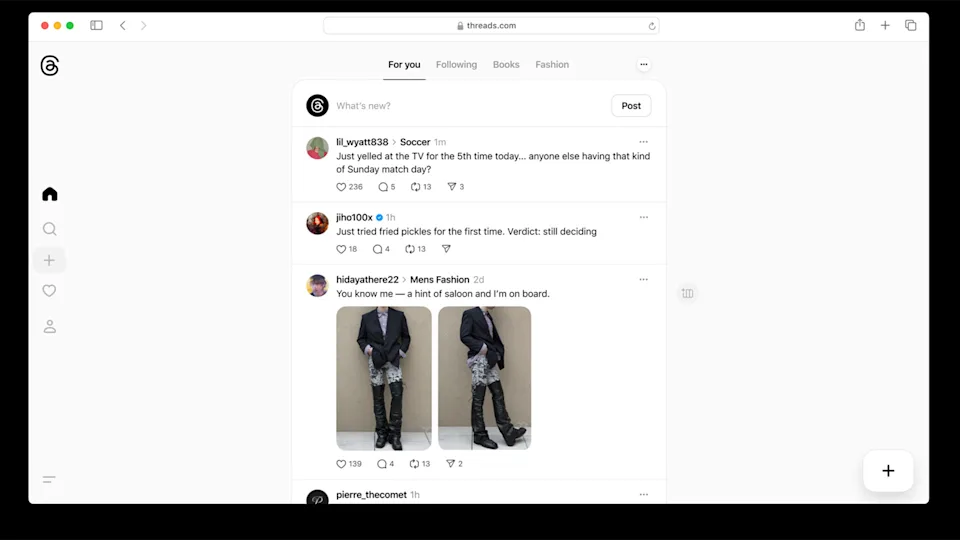
When Meta first put out its Twitter replacement Threads, people pointed out the company didn’t get the threads.com domain first and had to put the website on threads.net instead. At the time, threads.com was held by a messaging app startup, which was apparently cautious about the prospect of rebranding its entire business.

But then the startup was acquired by Shopify. And Meta did, at last, get hands on the threads.com domain for an undisclosed sum. And now Meta is migrating Threads’ site to threads.com, which will see it add various features that were much needed for the web version of Threads.

The updated website now includes a new composer that pops up in a separate window, so you can continue to browse your feeds while crafting a new post. It also makes it possible to scroll through your custom feeds with a single-column view (similar to the Threads mobile app), and adds a menu shortcut for saved posts. (Previously, the only way to see saved posts on the web was to add them as a pinned column.)


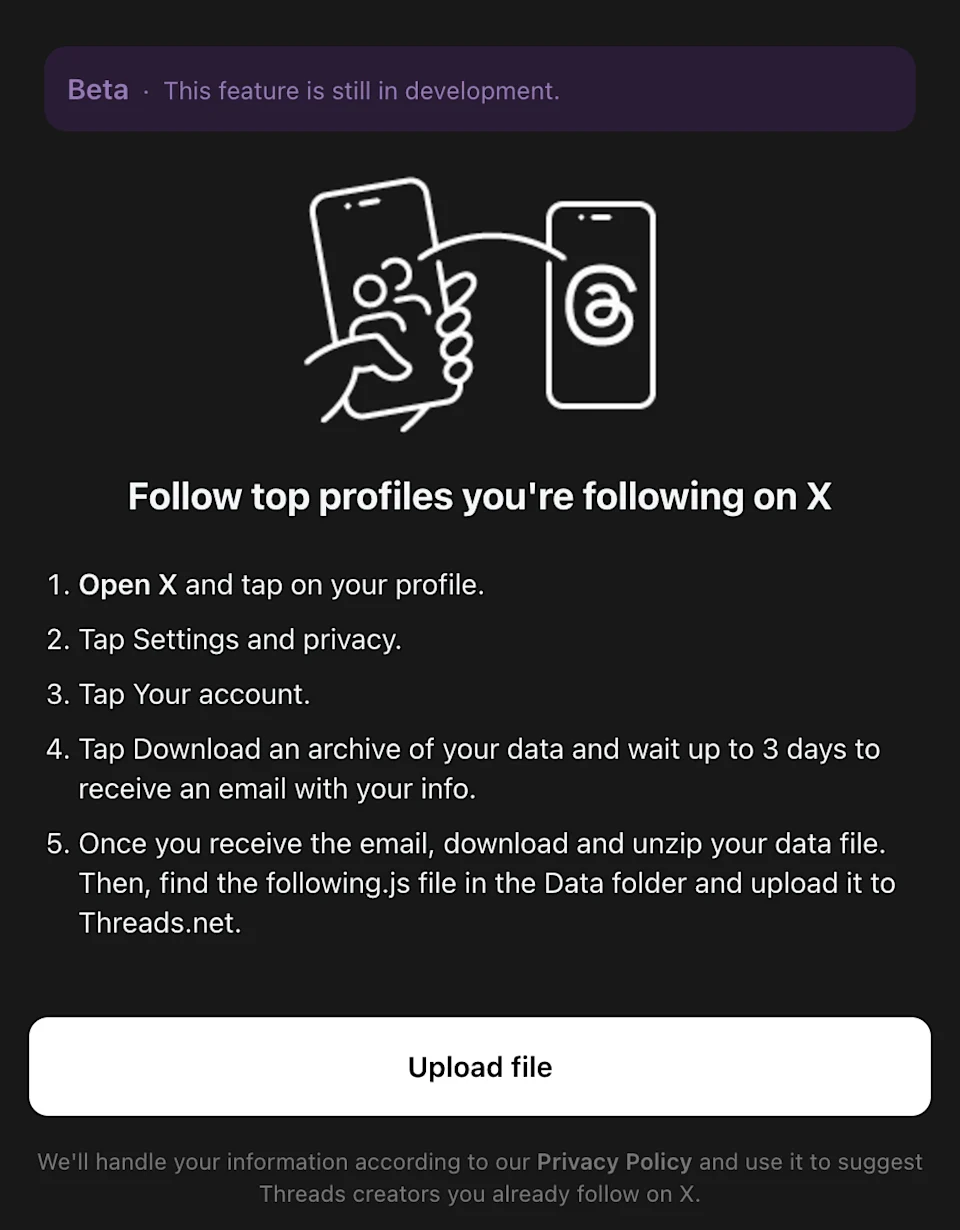
Meta is making more effort to attract users from X. Meta has said that it is experimenting with a new feature that will allow users to upload a list of people they follow on X and find their accounts on Threads. The feature is currently in beta and Meta has noted that the feature is a bit hard to use. Meta said that the data can take up to three days to be downloaded from X and it is not a straightforward process. In addition to helping users find familiar accounts on Threads, Meta could gain significant insights into user behavior on other platforms.

Perplexity builds browser for data collection to target ads


We need to get data from outside the app, said the CEO.​


The AI company Perplexity said that they were developing their focus on AI and were making their browser Comet back in February. Aravind Srinivas, their CEO, discussed the company’s reasons for doing so in a recent TBPN podcast. The main reason is they will collect data about what users do on their browser, and then sell that information to advertisers; “That’s kind of one of the other reasons we wanted to build a browser, is we want to get data even outside the app to better understand you,” he said. “We plan to use all the context to build a better user profile and, maybe you know, through our discover feed we could show some ads there.”

If that strategy sounds familiar, Google's Chrome browser has been taking a similar approach. Comet is built on top of Chromium, the open-source browser tech from Google. It is not out of the question that Perplexity would seize the opportunity to go directly to the source and buy Chrome outright following the recent antitrust ruling against Google in its search business. In the ongoing hearings about Google and its potential sale of Chrome, Chief Business Officer Dmitry Shevelenko said he thought Perplexity would be able to continue running the browser at its current scale. Remarkably, he was not interested in selling it to OpenAI.

Filter