• Download Indiasocialbook Android Native App (HERE)

  • Latest Ai Models Added To ISB-IndiaSocialBook With Unlimited Free Usage

Xtooni Domains for Cartoons, Art, and Creative Brands

Xtooni Domains for Cartoons, Art, and Creative Brands​


If you’re building anything in cartoons, adult animation, illustration, digital art, NFTs, or creative media,the right domain name matters more than most people think. A strong, flexible brand name makesprojects easier to grow, easier to monetize, and easier to remember.

The Xtooni domain set is designed for exactly that kind of creative work. Short, brandable, and visuallyexpressive, “Xtooni” fits naturally into animation culture, art communities, and modern digital projects.

Why the Xtooni Name Works So Well​

The name Xtooni feels playful, modern, and visual. It naturally connects to cartoons, animation, adultcartoons, digital illustration, comics, NFTs, and creative studios. It’s short, easy to pronounce, andflexible enough to support both clean mainstream animation and experimental or adult-focused artprojects.

That versatility is what makes it valuable as a long-term brand asset.

Xtooni.com – The Main Brand Foundation​

Best for flagship brands, studios, and platforms.Xtooni.com is the strongest and most versatile option in the collection.
The .com extension remains themost trusted worldwide, making it ideal as a primary brand or long-term project foundation.

Ideal uses include animation studios, adult animation platforms, digital art brands, scalable contenthubs, and IP-driven projects.Full details and pricing: https://82domain.com/domain/detail/26/xtoonicom


Xtooni.net – Community, Network, or Streaming Use​

Best for platforms, networks, and user communities.Xtooni.net works naturally for projects focused on connection and content flow.

It fits streamingplatforms, creator communities, and collaborative tools.Full details and pricing: https://82domain.com/domain/detail/27/xtooninet

Xtooni.store – Selling Art, Merch, or Digital Content​

Best for monetization and e-commerce.Xtooni.store is built for selling.

The .store extension clearly signals commercial intent and worksperfectly for merchandise, subscriptions, and digital art sales.Full details and pricing: https://82domain.com/domain/detail/28/xtoonistore

Xtooni.info – Content, SEO, and Authority​

Best for information, education, and organic traffic.Xtooni.info is ideal for blogs, tutorials, guides, FAQs, and documentation.

It supports SEO growth andbrand authority.

Full details and pricing: https://82domain.com/domain/detail/30/xtooniinfo

Xtooni.xyz – Modern, Experimental, and Web3 Projects​

Best for Web3, AI art, and experimental creativity.Xtooni.xyz fits modern creative spaces such as NFTs,
AI-generated animation, and metaverse artprojects.Full details and pricing: https://82domain.com/domain/detail/29/xtoonixyz

These domains are also available through Afternic: https://www.afternic.com/profile/skypeaklimitsFinal Thoughts Good domain names that naturally fit cartoons, adult animation, and art are rare.

TheXtooni domains offer flexibility, credibility, and long-term value. If one fits your project, follow the link andsecure it before someone else does.

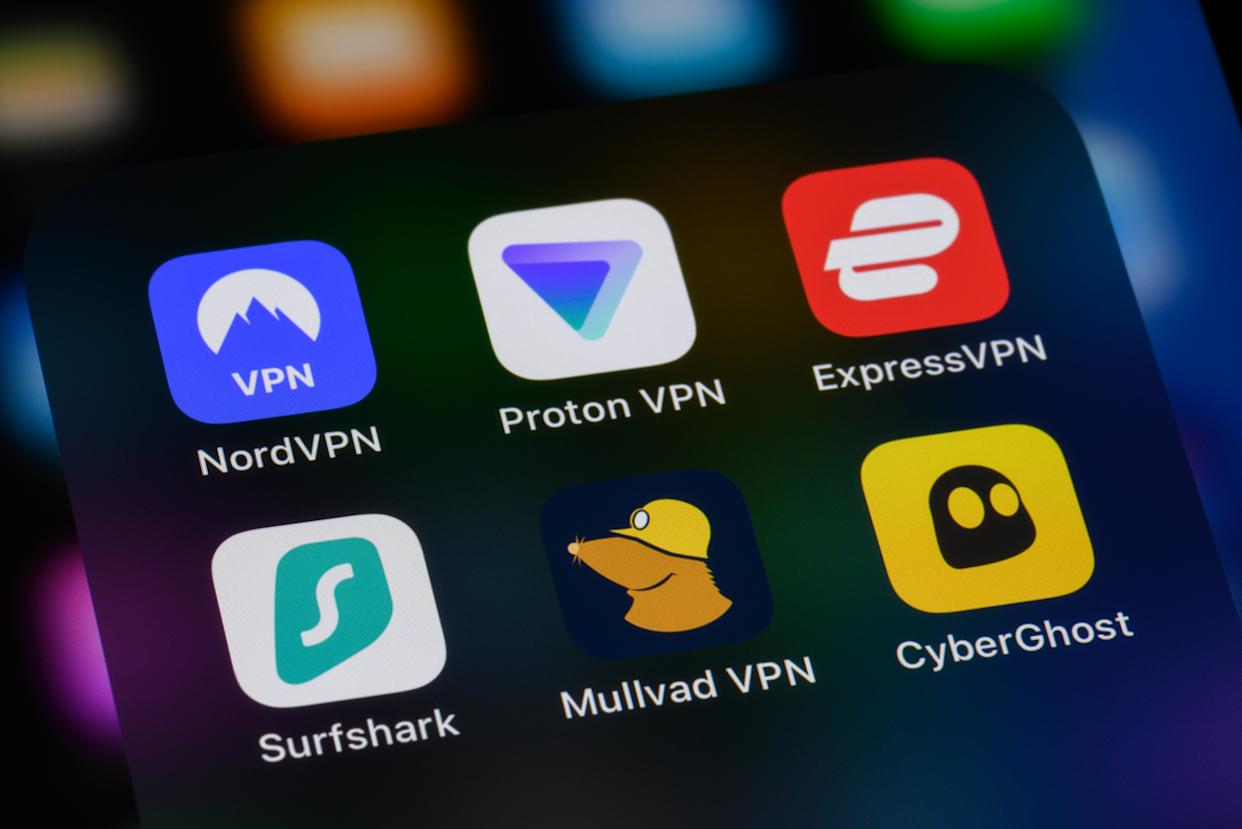
Best vpn in india free


The Best Four Virtual Private Networks (VPNs) That Are Completely Free and Can Be Trusted (With Download Links)

Looking for a virtual private network (VPN) that is completely free, genuinely works, and does not compromise your privacy? You are not the only one. If you select the appropriate virtual private network (VPN), a dependable free VPN might be a lifesaver in this day and age of growing worries around data tracking, IP exposure, and geo-restrictions.

Below is a list of four free virtual private networks (VPNs) that are not only free but also well-known and secure to use. I have personally selected alternatives that strike a compromise between privacy, usability, and performance, and they do not have any hidden fees.
---, numberProton VPN is the best free virtual private network (VPN) service that offers unlimited data.
The fact that Proton VPN is one of the very few virtual private networks (VPNs) that provides unlimited data on its free plan is certainly one of the things that sets it apart from the competition. Since it was developed by the same team that was responsible for Proton Mail, it is obvious that privacy is a primary concern.Reasons why it is worthwhile to use Proton VPN:
The bandwidth is unlimited, and there is no monthly data limits.* Strong encryption and a policy of not keeping any logs
✅ There are no advertisements and no tracking.
On the free plan, there are a limited number of server locations.
** ⚠️ From one gadget to the next

This is a fantastic option for those who are looking for a free virtual private network (VPN) for basic browsing, privacy, or to circumvent ISP tracking.

Download the free version of Proton VPN here: For more information, visit [https://protonvpn.com/free-vpn] (https://protonvpn.com/free-vpn).
---, number2. Windscribe is the best free virtual private network (VPN) in terms of features and flexibility.
Windscribe has one of the most generous free plans available in the virtual private network (VPN) industry. The fact that you have access to many countries and a substantial bandwidth cap is unusual for a free virtual private network (VPN).# The reasons why people adore Windscribe:
There is a monthly data allowance of 10 GB, which can be increased to 15 GB.* Multiple server locations are available.There is an integrated ad and tracking blocker.Applications for Windows, macOS, Android, iOS, and browsers are available.
Data is restricted on a monthly basis.

Windscribe is an excellent choice especially if you are looking for increased control, locations, and features.

The Windscribe Free VPN can be downloaded from the following website: [https://windscribe.com] (https://windscribe.com).
---, number# PrivadoVPN is the best free virtual private network (VPN) for speed.
PrivadoVPN is a VPN service that is not widely known yet surprisingly powerful. # It is based in Switzerland, which has very strict privacy rules, and it provides very fast speeds for a free virtual private network.## What sets PrivadoVPN apart from other VPN services:
✅ A monthly allowance of 10 GB of free dataThe servers are of a high speed.* ✅ Policy of not keeping any logsThe software is suitable for both downloading and ordinary use.
⚠❏ The free plan has a limited number of server locations.

This is an excellent choice if you are looking for a free VPN that is both quick and clean, and does not require a difficult setup.

To obtain PrivadoVPN at no cost, please visit the following website: [https://privadovpn.com/freevpn] (https://privadovpn.com/freevpn).
---, numberThere is a simple, secure, and truly free service called hide.me.
hide.me is a virtual private network (VPN) that prioritises users' privacy and provides a reliable free plan without inundating users with advertisements. It is simple to use and suitable for anyone just starting off.Key points to emphasise:
✅ If you do not wish to register, it is not required.* ✅ Comprehensive encryption* Ads are not present.
Support for multiple systems is provided.
** ⚠️ There are only a few spots available on the free plan.

[https://hide.me/en/free-vpn] (https://hide.me/en/free-vpn) This virtual private network (VPN) is an excellent choice for those who are looking for a VPN that is not only lightweight but also secure and without any complications.
---, number⚠️ A Warning That Is Very Important Regarding "Free VPNs"

Not all free virtual private networks (VPNs) are secure. A plethora of arbitrary VPN applications:
* Keep a record of your data.* To sell your browsing history* Inject advertisements or malicious software* Your internet connection should be significantly slowed down.

Due to the fact that they are trustworthy, transparent, and reputable, the four virtual private networks (VPNs) that were just mentioned are suggested.
---, number The conclusive verdict

If you so desire:
With Proton VPN, you can gain access to an unlimited amount of data.Windscribe is a product that offers more features and places.
← **PrivadoVPN** gives you a faster connection speed.
**Use that is both simple and private** ⇒ **hide.me**

All four are completely free, secure to download, and ideal for meeting the most fundamental requirements for privacy.

  • Article Article
Top 7 Awarded Web Design and Development Companies in Riyadh, Saudi Arabia

Riyadh has evolved into one of the fastest-growing digital hubs in the Middle East. With businesses rapidly shifting online and Saudi Arabia pushing toward Vision 2030 goals, the demand for high-quality websites, mobile apps, and digital platforms has skyrocketed.​


This growth has fueled the rise of top-tier web design and development Companies in Riyadh Saudi Arabia , many of which are recognized for award-winning creativity, innovation, and reliability. These Companies help brands build strong digital identities and deliver seamless user experiences that align with global standards.

In short, Riyadh is no longer just a business capital — it is becoming a regional leader in web development, design innovation, and digital excellence.

What Makes an Awarded Web Design and Development Agency Stand Out?
Award-winning Companies in Riyadh earn their reputation by going beyond basic website creation. What sets them apart is a combination of strategic thinking, creative expertise, and technical mastery. Some key factors include:

✔ Innovation and Modern Tech Adoption​

Top Companies embrace the latest technologies such as headless CMS, AI-powered features, interactive UI elements, and performance-optimized frameworks.

✔ UI/UX Excellence​

They focus on intuitive layouts, clean visuals, mobile responsiveness, and user-centric navigation — ensuring every visitor has a smooth and engaging experience.

✔ Strong Portfolio Across Industries​

Awarded Companies have a diverse portfolio showcasing work for corporate, government, startup, and enterprise clients. Their past projects reflect quality, creativity, and measurable results.

✔ Recognized Industry Awards​

Whether local recognitions or global design and development awards, these achievements highlight their credibility and proven expertise.

✔ Customer Satisfaction & Long-Term Partnerships​

They maintain high client retention by delivering projects on time, offering transparent communication, and providing ongoing support.

Overall, these Companies are trusted because they combine creativity, strategy, and technology to build digital solutions that truly elevate a brand.

Top 7 Awarded Web Design and Development Companies in Riyadh​

1. Apptunix​

Overview: Apptunix is widely recognized as a top software and web development company in Saudi Arabia, offering award-winning solutions to clients across various industries. With a strong team of 150+ skilled developers, designers, and strategists, Apptunix has successfully delivered over 200 projects globally, ranging from enterprise-level platforms to custom eCommerce solutions.

Expertise & Services:

  • Custom Web Development: Scalable web applications tailored to business goals.

  • eCommerce Platforms: Feature-rich online stores with smooth UX and secure payment integration.

  • Enterprise Solutions: Complex systems for large-scale businesses with seamless workflow management.

  • UI/UX Design: Intuitive and visually engaging interfaces for web and mobile platforms.

  • Technology Stack: React, Angular, Node.js, Laravel, WordPress, Shopify, and more.
Why They Stand Out:

  • Recognized for innovation, creativity, and high client satisfaction.

  • Deep understanding of Saudi market trends and global best practices.

  • Strong focus on long-term support and digital transformation strategies.
Key Stats:

  • Employees: 150+

  • Projects Completed: 200+

  • Years of Experience: 7+

2. Blocktunix​

Overview: Blocktunix specializes in blockchain-powered web solutions and secure digital platforms. It is known for combining technical expertise with innovative design, serving clients who require modern, future-ready digital solutions.

Expertise & Services:

  • Blockchain Web Development: Smart contracts, cryptocurrency integration, and decentralized apps.

  • Custom Web Applications: High-performance websites for fintech, eCommerce, and enterprise clients.

  • UI/UX Design: User-friendly interfaces focused on simplicity and engagement.

  • Security & Scalability: Emphasis on secure architecture and scalable web solutions.
Why They Stand Out:

  • Unique focus on emerging technologies like blockchain and Web3.

  • Highly technical development team capable of delivering complex projects.

3. Quick Works​

Overview: Quick Works is a fast-growing web development agency catering to SMEs and startups in Riyadh. They are known for delivering efficient, cost-effective, and tailored solutions with a focus on speed without compromising quality.

Expertise & Services:

  • Responsive Web Design: Mobile-friendly websites for all devices.

  • CMS Solutions: WordPress, Drupal, and custom CMS for easy website management.

  • eCommerce Development: Quick-to-market online stores with smooth checkout and integration.

  • Digital Strategy Consultation: Helping startups plan digital growth and online presence.
Why They Stand Out:

  • Agile and collaborative approach, ensuring projects are delivered on time.

  • Ideal for small and medium businesses seeking professional, affordable solutions.

4. UAE Developers​

Overview: UAE Developers is a regional agency with a growing presence in Riyadh, specializing in full-stack web development and digital transformation services. They focus on creating websites and applications that are both visually appealing and technically robust.

Expertise & Services:

  • Full-Stack Development: Front-end and back-end solutions with modern frameworks.

  • eCommerce Solutions: Scalable online stores with multiple payment options.

  • CMS-Based Websites: WordPress, Joomla, and custom CMS solutions for easy content management.

  • Website Maintenance & Support: Continuous updates, security, and optimization.
Why They Stand Out:

  • Strong regional market insight for culturally relevant designs.

  • Balanced focus on creative design and technical functionality.

5. Riyadh Web Solutions​

Overview: Riyadh Web Solutions is a smaller agency focused on delivering affordable and customized web design and development services for startups and SMEs.

Expertise & Services:

  • Website Design & Development: Simple yet professional websites for local businesses.

  • Branding & Graphic Design: Visual identity support for small enterprises.

  • SEO & Digital Marketing: Basic SEO optimization to enhance online visibility.
Why They Stand Out:

  • Cost-effective solutions for businesses with limited budgets.

  • Strong understanding of local business needs and trends.

6. Digital Craft Riyadh​

Overview: Digital Craft Riyadh is a creative agency specializing in web design, branding, and maintenance services. They focus on combining aesthetics with functionality to deliver engaging websites for small businesses and startups.

Expertise & Services:

  • Creative Web Design: Visually appealing and user-friendly websites.

  • Branding & Digital Identity: Logos, visual guidelines, and brand storytelling.

  • Website Maintenance: Updates, performance optimization, and security monitoring.
Why They Stand Out:

  • Focus on storytelling through design.

  • Offers tailored solutions for businesses looking to strengthen their digital identity.

7. Smart Web Riyadh​

Overview: Smart Web Riyadh provides mid-level web development and digital solutions to small businesses and local enterprises.

Expertise & Services:

  • Website Development: Basic to medium-complexity websites.

  • Maintenance & Hosting: Affordable hosting and technical support packages.

  • Digital Marketing Support: Social media integration and basic SEO services.
Why They Stand Out:

  • Quick turnaround for small-scale projects.

  • Focus on affordable digital solutions without compromising basic quality.

Conclusion​

Selecting the right web development company in Saudi Arabia is a critical decision that can determine the success of your online presence. With Riyadh emerging as a hub for digital innovation, businesses have access to a wide range of companies offering award-winning expertise, cutting-edge technologies, and tailored solutions.

When making your choice, consider experience, technical capabilities, portfolio quality, client satisfaction, and long-term support. Top Companies, such as Apptunix, Blocktunix, and Quick Works, combine these factors with innovative design, modern technology stacks, and deep market understanding, ensuring your website is not only functional but also competitive and future-ready.

Investing in a professional web development partner offers more than just a website—it provides a strategic asset that drives business growth, enhances brand credibility, and delivers a seamless digital experience for your audience.

In summary, the right agency will serve as a trusted technology partner, guiding your business through digital transformation while providing ongoing support, performance optimization, and innovative solutions tailored to your needs. Choosing wisely today ensures your website remains a powerful tool for growth and engagement in the Saudi Arabian market.
  • Like
Reactions:

Guest post rules

Guest Post Guidelines​


We welcome high-quality guest posts from writers, bloggers, and industry experts who want to share valuable insights with our audience. If you have original, well-researched content that educates, informs, or solves real problems, we’d love to hear from you.


What we’re looking for:


  • 100% original and plagiarism-free content
  • Informative, engaging, and easy to read
  • Relevant to our website niche
  • Proper structure (headings, short paragraphs, bullet points)
  • Actionable tips or fresh perspectives

Content rules:


  • Articles should be well-written in clear English
  • No spun, AI-copied, or promotional-only content
  • One relevant do-follow link allowed (more on request)
  • Images are optional but recommended

Why publish with us?


  • Exposure to a growing and targeted audience
  • Quality backlink to your website
  • Long-term content visibility

If you’re interested in contributing, send your topic ideas or completed article along with your website link. We’ll review and get back to you as soon as possible.

How to Legally Apply for Official Documents: Driver’s Licenses, Passports & ID Cards (Step-by-Step Guide)

---


Introduction


Applying for official documents such as driver’s licenses, passports, or national ID cards can be confusing — especially when requirements vary by country. The good news is that with the right guidance and document checklists, you can complete these processes accurately and legally.


In this article, we’ll walk you through practical steps, requirements, and tips for legal applications — and share reliable resources that help you prepare with confidence.


---


Understanding Official Documents & Why It Matters


Official documents like driver’s licenses, passports, and resident permits are issued by government authorities. They serve as proof of identity and authorization for travel or residency, and every country has its own procedures and legal steps to obtain them.


Trying to bypass official systems or using fraudulent shortcuts is illegal and can result in severe penalties. That’s why it’s essential to follow legitimate application processes and rely on accurate information from trusted sources.


---


Driver’s License Application: What You Need to Know


Whether you’re applying for a driver’s license in Poland, France, or any other country, the basic steps generally include:


1. Verifying eligibility


2. Preparing required documents (e.g., ID, proof of residence)


3. Passing theory and practical exams


4. Submitting your application to the official authority


For detailed, country-specific guidance and document checklists, visit GlobalRealDocumentsOnline.com’s Driving License section.


Guidance for driver’s license applicants:

https://globalrealdocumentsonline.com/driving-license/


---


Passports: Legal Routes for Application


A passport is one of the most important travel and identity documents. Each country issues passports through its foreign affairs department or equivalent authority. The steps typically involve:


Filling out the official application form


Providing proof of citizenship & identity


Submitting photographs that meet requirements


Paying official government fees


To understand the passport application steps for your country and get a checklist of required documents, explore the Passports section on GlobalRealDocumentsOnline.com.


Passport application guidance:

https://globalrealdocumentsonline.com/passports/


---


National ID Cards & Resident Permits


National identity cards and resident permits are essential for legal residence and everyday identification. The process varies widely but always involves working with official government authorities.


For example, if you need help preparing documents and understanding the application process for a national ID (such as a Greek ID card), this is detailed at GlobalRealDocumentsOnline.com.


ID card guidance:

https://globalrealdocumentsonline.com/id-cards/


---


Tips for a Smooth Legal Application Process


✔ Always use official government forms and portals first

✔ Double-check documentation requirements before submitting

✔ Keep copies of everything you submit

✔ Ask for official receipts and confirmation numbers

✔ Avoid anyone offering to “sell” official documents — it’s illegal


A trusted platform like GlobalRealDocumentsOnline.com provides clear legal guidance and document preparation tips every step of the way.


---


Conclusion


Navigating official application processes for driver’s licenses, passports, and ID cards can seem complex, but with accurate information and legal guidance, you can complete them confidently and correctly.


For step-by-step checklists and country-specific tips, check out the reliable guidance on GlobalRealDocumentsOnline.com — your source for legal and compliant document application help.


---


Quick Links (For Easy Reference)


Driving License Guidance: https://globalrealdocumentsonline.com/driving-license/


Passport Application Information: https://globalrealdocumentsonline.com/passports/


National ID Cards Guidance: https://globalrealdocumentsonline.com/id-cards/


Resident Permits & Visas: https://globalrealdocumentsonline.com/resident-permits/

Your projects can now be encrypted in Proton's Lumo AI chatbot


It is now possible for all users to download Lumo 1.3.​

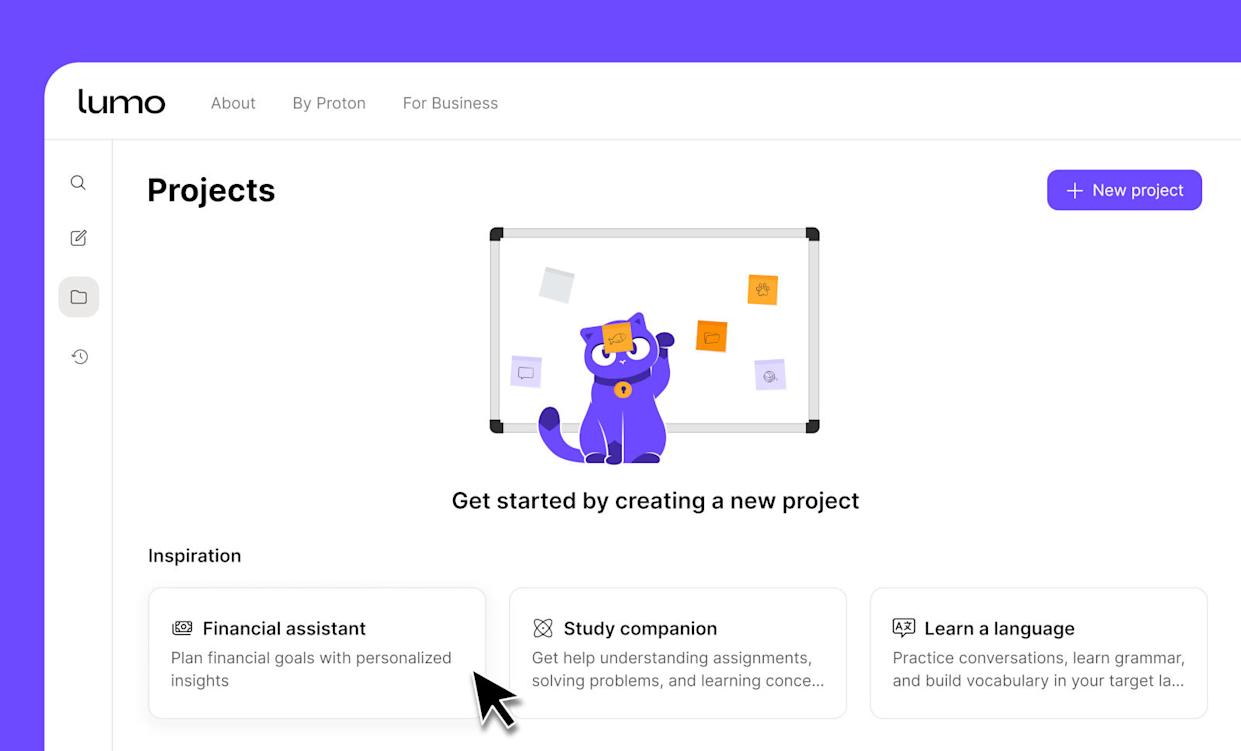
One of the new features that has been added to Proton's chatbot Lumo, which is focused on protecting users' anonymity, is called Projects. A dedicated and encrypted location for projects that you know you will access repeatedly over an extended period of time, such as papers that you will have to work on during the entire semester or plans for a significant vacation that you will be taking later this year.Each and every project that you make will be remembered and stored by Lumo, including all of the information and all of the files that you upload. Any document that you upload or resources that you contribute to the chat will be synchronized across all of your devices, which means that you won't have to repeat yourself each time you visit a job. Proton Drive is also integrated with Projects, which enables you to effortlessly link documents and other files in your discussions; this is made possible by the integration.According to Proton, you are able to use the functionality for virtually any subject you like, and you can provide the chatbot with individualized instructions for each and every project you develop. In addition, it ensured that every project has its own encrypted environment and that it will not make use of your chat histories in order to train artificial intelligence models. As a matter of clarification, Lumo makes use of open source artificial intelligence models such as Nemo, OpenHands 32B, OLMO 2 32B, and Mistral Small 3.As of right now, the most recent version of Lumo is accessible to all users; however, if you are using a free account, you are only able to work on a single project. Lumo Plus requires a monthly subscription fee of ten dollars, and in order to produce an unlimited number of projects, you will need to subscribe to the service.

Tesla releases a seven-seat 2026 Model Y


The Premium All-Wheel-Drive Long Range variant is the only one that incorporates the little additional seats, which come at a price of $2,500.​

The 2026 Model Y from Tesla is now available for purchase on the company's website, and it comes with a new (and traditional) option: a seven-seat version that can be accessed through a third row. Your purchase of the Premium All-Wheel-Drive Long Range model is required in order to take advantage of the additional seating, which comes at a cost of $2,500. The option was initially hinted at by Tesla in an email sent to potential purchasers in the previous year. The communication promised "seating for up to seven and enough room for everyone's gear," as reported by Electrek at the time.According to the photographs that can be found on Tesla's configurator, the new seats appear to be meant primarily for youngsters because they do not provide a great deal of legroom. Despite the fact that Tesla states that the inside of the seven-seater vehicle "features fold-flat second-row and third-row seats," it is unclear whether these seats fold down electrically in the same manner as the second row.


There is a rise in competition for Tesla, particularly in the crossover/SUV market, and the company experienced yet another drop in sales during the most recent quarter. Before it was updated in the beginning of the previous year, the manufacturer had previously offered a seven-seat version of the Model Y in the United States for a brief period of time. Since that time, however, it has only been offered with a total of five passenger seats. In August 2025, Tesla introduced a six-seat "Model YL" version in China. This version had a six-inch wheelbase expansion, which is not present in the vehicle sold in the United States. This model is expected to be introduced to the market in the United States by the end of 2026, or possibly "never."The Model Y range has undergone very modest modifications, and these modifications are only available in the Premium version. A new black headliner, a larger, higher-resolution 16-inch touchscreen, and darker rear badging are some of the available options. Additionally, there is a dark gray "Helix" wheel option that measures 20 inches.

Meta revives AI hardware as metaverse layoffs begin


For a very long time, the layoffs have been in the works.​

According to Bloomberg, Meta has initiated the process of terminating the employment of more than one thousand employees from its Reality Labs division, which was responsible for developing products related to virtual reality and the metaverse. The firm will target its efforts on developing wearables, such as the current batch of Ray-Ban smart glasses that are powered by artificial intelligence, as stated in a message written by the Chief Technology Officer, Andrew Bosworth.The news is not really eye-opening. Reality Labs has suffered a loss of more than seventy billion dollars since the beginning of the year 2021. Despite the fact that Meta has done an excellent job of supplying consumer virtual reality headsets and smart glasses, the company's corporate enterprise has not been nearly profitable enough to justify the expense. The enormous gamble that Mark Zuckerberg made on the metaverse, which required changing the name of the corporation from Facebook to Meta in 2021, has, of course, been a complete and utter failure.Bloomberg reports that Meta's plans for the metaverse will now concentrate on mobile devices. This might suggest that there will be a combination of its future wearables and the mobile applications that are already available. "With the larger potential user base and the fastest growth rate today, we are shifting teams and resources almost exclusively to mobile in order to continue to accelerate adoption there," Bosworth said in a message that was sent out to staff this morning.According to Bosworth, the Virtual Reality division of Meta will "operate as a leaner, flatter organization with a more focused road map to maximize long-term sustainability." This however does not mean that Meta is completely abandoning its aspirations for virtual reality headsets. To put it simply, you shouldn't anticipate a sequel to Quest 3 any time soon.https://www.Indiasocialbook.com/about/editors/devindra-hardawar/

OnePlus CEO Pete Lau is wanted in Taiwan


There are allegations that the Chinese smartphone manufacturer has engaged in the unlawful employment of Taiwanese engineers.​

In response to charges that OnePlus CEO Pete Lau illegally employed people in Taiwan, Taiwanese authorities have issued a warrant for Lau's arrest. Two Taiwanese nationals who were employed by Lau have also been charged with criminal offenses. The smartphone manufacturer based in China has been accused of engaging in unlawful recruitment of more than seventy engineers from Taiwan by the company.Members of the Shilin District Prosecutors Office assert that OnePlus allegedly established a shell corporation in Hong Kong with a unique name, and then formed a branch in Taiwan in 2015 without obtaining approval from the government. According to reports, the department was responsible for doing research and development for OnePlus mobile phones. It is the contention of Taiwanese authorities that the measures taken by OnePlus constitute a violation of the Cross-Strait Act, which serves as a framework for the relationship between Taiwan and the Chinese mainland. At least one of the clauses of the act stipulates that in order for Chinese businesses to employ Taiwanese labor, they must first acquire authorization from the government of Taiwan.

Meta has closed three VR studios as part of its metaverse cuts

L

Armature, Sanzaru, and Twisted Pixel have all been terminated by the studio, and Supernatural will not receive any new content in the near future.​

The company's layoffs, which are centered on the metaverse, have had an impact on a number of Meta's virtual reality studios. There are three virtual reality studios that have been shut down by the corporation. These studios include Armature, Sanzaru, and Twisted Pixel. In the future, the virtual reality fitness app Supernatural will no longer receive new content updates.Both Twisted Pixel, which was responsible for the debut of Marvel's Deadpool VR in November, and Sanzaru, which is known for Asgard's Wrath, have announced on social media about the closures of their respective companies. It was claimed by Bloomberg that Armature, the company that was responsible for bringing Resident Evil 4 to Quest in 2021, has also shut down. Additionally, it was stated that the famous virtual reality exercise program Supernatural will no longer receive updates with new content, although the present edition will continue to receive support.There was confirmation of the closures from a spokeswoman for Meta. "We said last month that we were shifting some of our investment from Metaverse toward Wearables," the spokesman said in a statement to Indiasocialbook. the statement was provided to Indiasocialbook. "This is part of that effort, and we plan to reinvest the savings to support the growth of wearables this year."The reductions raise issues about Meta's commitment to supporting a virtual reality ecosystem in which it has made significant investments. Since the Quest 3S was released in 2024, the firm has not made any announcements on new virtual reality headsets. Additionally, the company "paused" the Horizon OS headsets made by Asus and Lenovo last month. Additionally, it is reducing the amount of in-house game development that it is doing.The company Meta is asserting, at least within its own ranks, that it is still dedicated to providing support to the industry. "These changes do not mean that we are moving away from video games," the director of Oculus Studios, Tamara Sciamanna, wrote in the memo that was reported by Bloomberg. As a result of this move, we are restructuring our investments such that they are concentrated on our third-party developers and partners in order to guarantee our long-term viability.https://www.Indiasocialbook.com/about/editors/karissa-bell/

https://www.Indiasocialbook.com/about/editors/karissa-bell/​

When it comes to spear-phishing, the FBI warns that North Korean hackers are using malicious QR codes


An alert warning was issued by the Federal Bureau of Investigation (FBI) of the United States of America on Thursday regarding North Korean state-sponsored threat actors that are using malicious QR codes in spear-phishing attacks that are targeting entities in the country.

"As of 2025, Kimsuky actors have targeted think tanks, academic institutions, and both U.S. and foreign government entities with embedded malicious Quick Response (QR) codes in spear-phishing campaigns," according to the FBI's announcement in the flash alert. "This type of spear-phishing attack is referred to as quishing."

The use of QR codes for phishing is a strategy that pushes victims to go from a machine that is protected by business policies to a mobile device that may not give the same level of protection. This effectively offers threat actors the opportunity to circumvent traditional defences.

It has been determined that Kimsuky, which is also known as APT43, Black Banshee, Emerald Sleet, Springtail, TA427, and Velvet Chollima, is a threat organisation that is associated with the Reconnaissance General Bureau (RGB) of North Korea. Spear phishing tactics, which are specifically designed to circumvent email authentication mechanisms, have been orchestrated by this organisation for a considerable amount of time.

By abusing inadequately set Domain-based Message Authentication, Reporting, and Conformance (DMARC) record policies, the hacker group was able to send emails that appear to have originated from a valid domain, as stated in an advisory that was distributed by the United States government in May of 2024.

During the months of May and June 2025, the Federal Bureau of Investigation (FBI) reported that it has witnessed the Kimsuky actors exploiting infected QR codes as part of their targeted phishing activities.

Sending emails that pretend to be from a foreign advisor and asking for the opinion of a think tank leader on recent events on the Korean Peninsula by scanning a QR code to gain access to a questionnaire
The use of a sham employee at the embassy to send emails to a senior fellow at a think tank, asking for their opinion on North Korean human rights issues, accompanied with a QR code that promised to enable access to a secure disc
Spoofing an employee of a think tank can be accomplished by the use at emails that contain a QR code that is intended to direct the victim to infrastructure that is under their control for further action.
The act of sending emails to a strategic consultancy business, inviting them to a conference that does not exist, and asking the receivers to scan a QR code in order to be redirected to a registration landing site that is aimed to harvest their Google account credentials by using a fake login page
The disclosure comes less than a month after ENKI disclosed information of a QR code campaign that was carried out by Kimsuky to disseminate a new variant of Android malware known as DocSwap in phishing emails that imitated a logistics company based in Seoul.

"Quishing operations frequently end with session token theft and replay, enabling attackers to bypass multi-factor authentication and hijack cloud identities without triggering typical 'MFA failed' alerts," the Federal Bureau of Investigation reported. "Adversaries then establish persistence in the organisation and propagate secondary spear-phishing from the compromised mailbox."

"Because the compromise path originates on unmanaged mobile devices outside normal Endpoint Detection and Response (EDR) and network inspection boundaries, quishing is now considered a high-confidence, MFA-resilient identity intrusion vector in enterprise environments."

RustyWater RAT Launched via Spear-Phishing in Middle East Sectors


It has been determined that the Iranian threat actor known as MuddyWater was responsible for a spear-phishing effort that targeted diplomatic, maritime, financial, and telecom sectors in the Middle East. The campaign was carried out with a Rust-based implant that was given the codename RustyWater.

"The campaign uses icon spoofing and malicious Word documents to deliver Rust-based implants capable of asynchronous C2, anti-analysis, registry persistence, and modular post-compromise capability expansion," CloudSEK resetter Prajwal Awasthi stated in a study that was published this week. Rust implants are capable of delivering these capabilities.

The most recent development is a reflection of the ongoing evolution of MuddyWater's tradecraft, which has gradually but steadily reduced its reliance on legitimate remote access software as a post-exploitation tool. Instead, it has shifted its focus to a diverse custom malware arsenal that includes tools such as Phoenix, UDPGangster, BugSleep (also known as MuddyRot), and MuddyViper.

It has been determined that the hacker gang, which is also known as Mango Sandstorm, Static Kitten, and TA450, is associated with the Ministry of Intelligence and Security (MOIS) of Iran. At the very least, it has been in working order since 2017.

A Microsoft Word document that, when opened, instructs the victim to "Enable content" in order to activate the execution of a malicious VBA macro that is responsible for deploying the Rust implant binary is included in the attack chain that distributes RustyWater. This attack chain is fairly straightforward. It is distributed through spear-phishing emails that are disguised as cybersecurity guidelines.

RustyWater, which is also known as Archer RAT and RUSTRIC, is a malicious program that collects information about victim machines, can identify security software that has been installed, can establish persistence through the use of a Windows Registry key, and can establish contact with a command-and-control (C2) server (also known as "nomercys.it[.]com") in order to facilitate file operations and command execution.

Towards the end of the previous month, Seqrite Labs identified the use of RUSTRIC as a component of attacks that were directed against companies in Israel that were involved in information technology (IT), managed service providers (MSPs), human resources, and software development. UNG0801 and Operation IconCat are the names that the cybersecurity organisation is using to keep track of the activities that is being monitored.

"Historically, MuddyWater has relied on PowerShell and VBS loaders for initial access and post-compromise operations," CloudSEK stated in their announcement. "The introduction of Rust-based implants represents a notable tooling evolution towards more structured, modular, and low noise RAT capabilities."

Meta announces many nuclear energy deals


In the ensuing decade, the acquisitions will bring 6.6 gigawatts of power online, which will be used to power artificial intelligence data centres.​


As well as the Prometheus supercluster, which is a data centre with a capacity of one gigawatt and is now under construction in Ohio, Meta has announced three new deals to procure nuclear electricity for its artificial intelligence infrastructure. A partnership between the social media giant and the power companies Vistra, TerraPower, and Oklo is being formed with the intention of delivering an estimated 6.6 gigawatts of generation to its projects by the year 2035.

In accordance with the agreement that the business has reached with TerraPower, the development of two additional reactors that are capable of delivering up to 690 megawatts of power will begin as early as 2032. Moreover, the agreement grants Meta the right to obtain energy from six additional reactors, which have the potential to provide an extra 2.1 gigawatts by the year 2035. TerraPower's "Natrium" reactors, which employ sodium rather than water as a coolant, would be the source of all of this power.

It is anticipated that 1.2 gigawatts of nuclear power will be operational by the year 2030, thanks to a partnership with Oklo. According to Meta, the deal paves the way for the building of several Oklo reactors, which will, according to the company, result in the creation of thousands of employment in Ohio, both in the construction and long-term operations sectors. In addition to being one of Oklo's top investors, OpenAI CEO Sam Altman also owns a little more than four percent of the company.

It is the goal of the agreement between Meta and Vistra to keep existing nuclear facilities operational for longer periods of time and to increase their output. Meta will purchase more than 2.1 gigawatts of power from some of Vistra's current plants in Ohio through new 20-year partnerships. In addition, Meta will support the expansion of capacity at those plants as well as another plant in Pennsylvania via these new agreements. The additional capacity, which would amount to 433 megawatts, is anticipated to be brought online by Vistra in the early 2030s.

Big tech is increasingly relying on nuclear power to power its dreams of artificial intelligence. In 2017, Meta entered into a nuclear power agreement with Constellation Energy that was for a period of twenty years. During this time, Microsoft is reopening the historically significant Three Mile Island plant, and as part of a twenty-year agreement, they will be the plant's only customer.

WhatsApp may be scrutinised under the EU's Digital Services Act


The Channels feature of WhatsApp has expanded to the point where it may be considered a "very large online platform" in the European Union, comparable to the way that Instagram and Facebook have evolved.​


According to sources from Reuters, the messaging software WhatsApp developed by Meta could soon be subject to more stringent regulation (and perhaps penalties) under the Digital Services Act approved by the European Commission. As a result of the fact that WhatsApp Channels, the app's broadcasting feature, reached around 51.7 million average monthly active users in the European Union during the first six months of 2025, the tool has surpassed the 45-million-person threshold that allows DSA regulations to be implemented.

According to the European Commission, a platform is considered to be a "very large online platform" (VLOP) whenever it accounts for 45 million or more users on a monthly basis. Once an application or service reaches that threshold, it becomes subject to the Digital Services Act (DSA) and all of its requirements about how digital platforms should operate, notably with regard to the removal of content that is unlawful or harmful. If an organisation does to comply with the DSA, they may be subject to a fine of up to six percent of its annual income anywhere in the world.

However, WhatsApp's Channels feature, which enables users to make one-sided postings to anyone who follows their channel, does appear a lot more like Meta's other social media platforms. WhatsApp has always functioned as a private messaging program. "So here we would indeed designate potentially WhatsApp for WhatsApp Channels, and I can confirm that the Commission is actively looking into it, and I wouldn't exclude a future designation," a spokeswoman for the Commission said in a daily news conference that has been accessed by Reuters.

Indiasocialbook has requested that Meta provide their thoughts on the potential new designation for WhatsApp. When we receive a response, we will update this story.

November 2025 was the first time that it was stated that WhatsApp would become a regulatory target in the European Union; however, Meta has been dealing with fines connected to the Digital Services Act (DSA) since a significant amount of time before that. Within the month of October 2025, Meta was accused with violating the law of the European Union due to the manner in which it requests people to report illegal content on Facebook and Instagram. Because consumers in the Netherlands were not "sufficiently able to make free and autonomous choices about the use of profiled recommendation systems" in the business's applications, a Dutch court ordered the company to adjust the way it presents the timelines on its platforms earlier that month. This was due to the fact that the company's apps have been criticised for their lack of transparency.

Amazon is reportedly building a suburban Chicago large box store


Despite the fact that the corporation has attempted to enter the physical retail sector on many occasions, only its food stores have proven to be successful.​


According to a story by The Information, Amazon is planning to construct a big-box retail store in the suburbs of Chicago, which would symbolise the company's return to the world of physical retail. Orland Park, Illinois will be the location of the opening of the 225,000-square-foot retail building, which will provide the company with the opportunity to offer more than only groceries. This comes after the company shut down the majority of its physical bookshops and gift shops in early 2022.

It is possible that the new store will be comparable to competitors such as Target and Walmart, as well as some of Amazon's existing Whole Foods and Amazon Fresh locations, because it will not only provide in-store shopping but will also serve as a fulfilment centre for online orders. "The proposed development will offer a wide selection of products, including groceries and general merchandise, with accessory services and possibly dining locations for prepared food sold onsite," Amazon stated in a planning document that The Information viewed. "The proposed development will also involve the provision of dining locations."

Despite the fact that it is best recognised as an online marketplace, Amazon has made numerous attempts to establish a presence in retailers' physical stores. Amazon Books offered books based on what was popular on the company's website, Amazon 4-star sold a variety of products that were given four or more stars in Amazon reviews, and the company's Amazon Go stores sold pre-made food and select groceries using its cashier-less "Just Walk Out" technology. All of these products were sold by Amazon.

Amazon has essentially given up on all of those trials in favour of remaining committed to the supermarket brand that it acquired in 2017, Whole Foods, as well as the new grocery brand that it has established in the years that have passed since then, Amazon Fresh. According to the Chicago Tribune, this new store may be an altogether new concept or it may be an extension of Amazon Fresh; nevertheless, in order for it to move forward, it will be necessary to receive approval from the Orland Park Village Board.

Apple should reintroduce ICEBlock


It is not the ICE personnel who are at risk. Law enforcement officers pose a threat.​


ICEBlock and other similar apps that crowdsourced the location of Immigrations and Customs Enforcement activities were withdrawn from the App Store by Apple in October, as a result of the pressure that was exerted by the Trump administration. The rationale that Apple has stated? The applications have the potential to "be used to harm law enforcement officers." It is not necessary for ICE officials to be protected by citizens because they are armed to the teeth. In every way, Apple had that completely wrong.

When ICE agent Jonathon Ross was responsible for the murder of Renee Nicole Good, 37 years old, on Wednesday, it became hard to deny the fact that this was the case. You don't need me to be telling you about her gruesome final moments at this point. However, the footage, which is gruesome and upsetting in nature, is now available, and we are able to see the misinformation that the Trump administration has been spreading about the event for what it actually is.

Long before this week, the Immigration and Customs Enforcement agency was a potentially lethal force. This was the eighth shooting that the CIA has carried out since September. In the year 2025, 32 individuals passed away while being held by ICE. A third of the people who are detained by Immigration and Customs Enforcement (ICE) officials, who frequently wear masks and refuse to identify themselves, do not even have any criminal history.

The fact that the victim did not have brown skin was, arguably, the most significant shift that occurred this week. A white American citizen was killed by Immigration and Customs Enforcement (ICE), and according to her wife, she was a Christian who was also a devoted and caring mother. Regrettably, the United States of America has a long and tumultuous history of ignoring acts of violence to the extent that they are directed towards a marginalised minority. Readers of mainstream news in this location were unable to accomplish it.


On January 8, 2026, in Los Angeles, California A demonstration was held in front of the Federal Building in downtown Los Angeles on January 8, 2026, in which dozens of people were holding photographs of Renee Nicole Good. The demonstration took place a day after an ICE agent had killed Good in Minneapolis. Geno Molina/Los Angeles Times via Getty Images (Genaro Molina via Getty Images) (Genaro Molina via Getty Images)

JD Vance, the Vice President, made a bogus accusation against Good on Thursday, making the assertion that the mother was a member of a "left-wing network." In addition to this, he asserted that the Immigration and Customs Enforcement (ICE) agency possesses "absolute immunity" when it comes to carrying out activities such as killing Americans in broad daylight. In the meantime, Karoline Leavitt, the press secretary for the White House, presented the fatal incident as the "result of a larger, more sinister left-wing movement that has spread across our country." The Federal Bureau of Investigation has prevented the criminal investigation bureau in Minnesota from gaining access to material in order to carry out a comprehensive investigation into the homicide.

To summarise, an agency that had the full support of the federal government was responsible for the death of an innocent citizen. Despite the fact that there are tools available to tell the public about the possible places that the agency may be acting in, Apple has chosen to keep these tools hidden from us.

Within the realm of big technology, Apple has developed a reputation for portraying itself as a more secure and socially progressive alternative. The company's keynotes are filled with touching testimonials about how the features of the iPhone and Apple Watch have saved people's lives. In order to honour the LGBTQ+ community, the company has released accessories with a Pride theme, and it has (so far) resisted the pressure from the government to dismantle its diversity, equity, and inclusion programs. The "Here's to the crazy ones" television commercial, which intercut pictures of Dr. Martin Luther King Jr., John Lennon, and Gandhi, was the advertisement that marked the beginning of the contemporary period for the company. This advertisement openly cloaked its corporate image in civil disobedience and social justice stances.


An image of Dr. Martin Luther King Jr. that was featured on the homepage of Apple (2015) (Italian company Apple / Internet Archive)

However, the company also uses that progressive image for its own self-serving purposes, with the intention of concealing its business interests under the appearance of responsibility. When government policies push for openness or interoperability, for instance, Apple notifies its consumers of the potential hazards to their privacy and security that arise from these regulations. When Apple puts a lot of restrictions on where you can acquire apps, it's because they want to keep children away from pornographic content. In addition, Apple has come to the conclusion that the potential safety of ICE officials is more important than the actual danger that they offer to the communities that they investigate and harass.

It is possible that the availability of ICEBlock on the App Store did not affect the results of the events that took place on Wednesday. Nevertheless, it might carry on with its duties as a community informant. It might make it simpler to inform the general public about the locations where these masked thugs are congregating, which might even assist other people in avoiding the same destiny as Good.

NASA ends Crew-11's mission a month early


This is the first time that NASA has decided to shorten the duration of a mission due to a medical emergency.​


In response to a "medical concern" with one of the crew members, NASA has made the decision to return the Crew-11 astronauts down to Earth one month earlier than they had initially intended. According to the space agency, this is the first time in its history that a mission has been cut short due to a medical issue; however, the agency did not disclose the identity of the crew member or the specific nature of the crisis or the severity of the situation. A return date that is no earlier than January 14 is the target date that the agency is aiming for, with the exact timeline being determined by the weather. Approximately three forty minutes before three o'clock in the morning on January 15, the crew will make a splashdown off the coast of California assuming NASA's initial plan is successful.

A medical concern with a crew member that arose the day before was the reason that the agency had already postponed a spacewalk that was supposed to take place on the International Space Station (ISS) from January 8 to January 9. James "JD" Polk, the chief health and medical officer for NASA, stated that the astronaut who was affected is "absolutely stable" and that this is not a situation that requires an emergency evacuation. According to what he claimed, the International Space Station (ISS) has a "robust suite of medical hardware" onboard, but it is not sufficient for a comprehensive workup to a diagnosis. Without a correct diagnosis, NASA is unable to determine whether or not the environment aboard the International Space Station (ISS) could have a significant impact on the health of the astronaut. Because of this, the organisation is taking a cautious approach to the situation.

On August 1, Crew-11 embarked on its journey to the International Space Station. It was anticipated that they would return to Earth on or around February 20. After they have left the station, there will be just three people left: two cosmonauts and one astronaut who will be in charge of all of the experiments that are now being carried out on the orbiting laboratory. Midway through the month of February, the replacement crew, Crew-12, was scheduled to arrive at the International Space Station (ISS). However, NASA is contemplating sending the astronauts to the station earlier than that.

As of 5:15 a.m. Eastern Time on January 10, 2025: A provisional return date for Crew-11 has been included in this article, which has been updated.

NASA finishes preparations for its first crewed moon trip in 50 years


The organisation is aiming for the month of February as the debut date for Artemis 2.​


In 2024, the National Aeronautics and Space Administration (NASA) made the announcement that the Artemis 2 mission will be delayed until April 2026. After further investigation, the agency has stated that it may begin operations as early as February, with the first flying opportunity scheduled for February 6th. Both the Space Launch System (SLS) rocket and the Orion spacecraft will shortly be transported to their respective launch pads at the Kennedy Space Centre in Florida. The National Aeronautics and Space Administration (NASA) is presently in the process of making the final preparations for the mission. From the assembly building to Launch Pad 39B, the spacecraft system will travel a distance of four miles, which might take up to twelve hours to complete. The National Aeronautics and Space Administration (NASA) is aiming for a date that is no earlier than January 17, with the specific day being contingent on the weather and the potential requirement for additional time to handle technical concerns.

Since the Apollo program successfully completed its last mission to the moon in 1972, Artemis 2 is the first crewed mission to the moon. During the ten-day journey, there will be four astronauts on board who will be evaluating whether or not the key life support systems of Orion are capable of supporting human passengers on future missions that last for longer periods of time. First, they will complete two orbits around the Earth, and then by the time they reach the far side of the moon, they will have travelled 4,700 miles. At the end of January, NASA plans to carry out a wet dress rehearsal in the event that the Space Launch System (SLS) and the Orion system are implemented as planned. For the purpose of getting ready for the actual event, the agency will load cryogenic propellants into the rocket and will perform a full launch countdown while the rehearsal is taking place.

Over 2 Million Devices Infected by Kimwolf Android Botnet via ADB and Proxy Networks


Synthient found that Kimwolf tunneled through home proxy networks to infect over 2 million Android devices.

"Key actors involved in the Kimwolf botnet are observed monetizing the botnet through app installs, selling residential proxy bandwidth, and selling its DDoS functionality," the company claimed last week.

Last month, QiAnXin XLab revealed Kimwolf's ties to AISURU. Kimwolf, an Android AISURU version, has been active since August 2025. Recent evidence suggests the botnet was behind a number of record-setting DDoS attacks late last year.

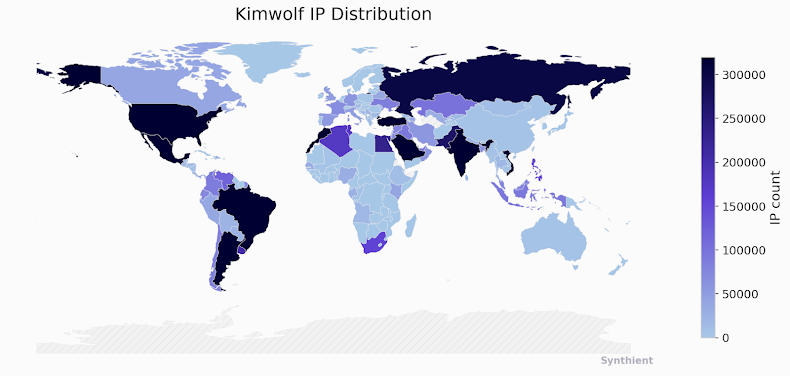
Malware uses infected systems to send malicious traffic and launch large-scale DDoS attacks. Most infections occur in Vietnam, Brazil, India, and Saudi Arabia, with Synthient observing 12 million distinct IP addresses per week.

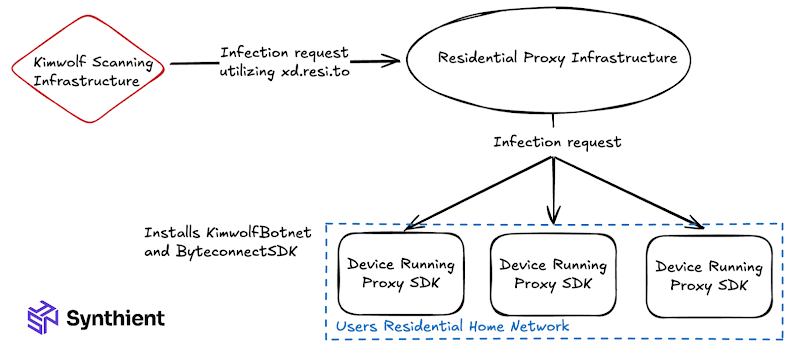
Botnet attacks mostly target Android devices with an exposed Android Debug Bridge (ADB) service utilizing a scanning infrastructure that leverages residential proxies to install malware. At least 67% of botnet devices are unauthenticated and have ADB enabled by default.

Proxy providers may pre-infect these devices with SDKs to secretly join the botnet. Unofficial Android smart TVs and set-top boxes are the most compromised.


Using proxy IP addresses that were made available for rent by China-based IPIDEA, which had applied a security patch on December 27 to limit access to local network devices and numerous vulnerable ports, Kimwolf infections had been exploited as recently as December 2025. According to IPIDEA, it is the "world's leading provider of IP proxy" since it has more than 6.1 million IP addresses that are updated every day and 69,000 IP addresses that are added every day.

To put it another way, the method of operation is to make use of IPIDEA's proxy network as well as other proxy providers, and then to tunnel through the local networks of systems that are running the proxy software in order to drop the virus. In order to accept additional commands, the primary payload is configured to listen on port 40860 and establish a connection to 85.234.91[.]247:1337.


"The scale of this vulnerability was unprecedented, exposing millions of devices to attacks," according to Synthient Technologies.

In addition, the attacks infect the devices with a bandwidth monetization service known as Plainproxies Byteconnect SDK, which is an indication of broader attempts to monetize the devices. The Software Development Kit (SDK) makes use of 119 relay servers, which are responsible for receiving proxy duties from a command-and-control server. These tasks are subsequently carried out by affected devices.

According to Synthient, the company has identified the infrastructure that is being utilized to carry out credential-stuffing attacks that are directed against IMAP servers and major websites on the internet.

"Kimwolf's monetization strategy became apparent early on through its aggressive sale of residential proxies," the business stated in its announcement. "By offering proxies as low as 0.20 cents per GB or $1.4K a month for unlimited bandwidth, it would gain early adoption by several proxy providers."

"The discovery of pre-infected TV boxes and the monetization of these bots through secondary SDKs like Byteconnect indicates a deepening relationship between threat actors and commercial proxy providers."

It is advised that proxy providers restrict queries to RFC 1918 addresses, which are Private Internet Protocol address ranges that are defined for usage in private networks. This is done in order to mitigate the risk. In order to avoid unwanted access, it is recommended that organizations securely lock down any devices that are running unauthenticated ADB shells.

Russian Hackers Target Ukrainian Military and Government on Viber


Viber messaging platform has been used by the Russia-aligned threat actor known as UAC-0184 to distribute malicious ZIP archives to Ukrainian military and government entities. This threat actor has been spotted targeting Ukrainian military and government entities.

"This organization has continued to conduct high-intensity intelligence gathering activities against Ukrainian military and government departments in 2025," the 360 Threat Intelligence Center stated in a technical assessment. " These activities have been ongoing since 2025."

The hacker gang, which is also known as Hive0156, is most recognized for its use of war-themed baits in phishing emails in order to deploy Hijack Loader in attacks that are directed against Ukrainian entities. Following that, the malware loader functions as a conduit for infections caused by Remcos RAT.

At the beginning of January 2024, CERT-UA was the first organization to document the threat actor. It has been discovered that subsequent assault campaigns make use of messaging applications such as Signal and Telegram as mediums for the distribution of malicious software. This strategy appears to have undergone additional development, according to the most recent findings from the Chinese security system vendor.

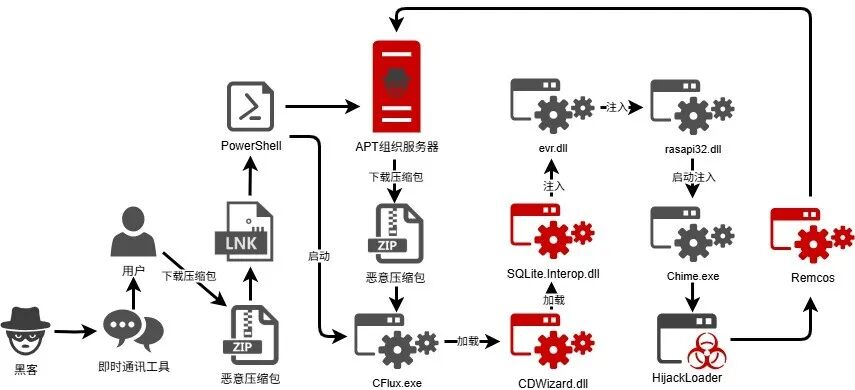
Viber is used as the initial intrusion vector in the attack chain, which consists of the distribution of malicious ZIP archives that contain several Windows shortcut (LNK) files that are disguised as authentic Microsoft Word and Excel documents in order to deceive recipients into opening them.

At the same time as Hijack Loader is being secretly executed in the background by retrieving a second ZIP package (named "smoothieks.zip") from a remote site using a PowerShell script, the LNK files are designed to send a fake document to the victim in order to reduce their level of suspicion.


By employing methods such as DLL side-loading and module stomping, the assault is able to circumvent detection by security solutions. This is accomplished through a multi-stage process that involves the reconstruction and deployment of Hijack Loader in memory. After that, the loader performs a search for installed security software in the environment. This search includes software associated with Kaspersky, Avast, BitDefender, AVG, Emsisoft, Webroot, and Microsoft. The loader does this by computing the CRC32 hash of the application that corresponds to the malware.

In addition to establishing persistence through the use of scheduled processes, the loader takes measures to circumvent static signature detection before secretly executing Remcos RAT by injecting it into "chime.exe." Attackers are granted the power to manage the endpoint, run payloads, monitor activity, and steal data through the use of the remote administration tool.

"Although marketed as legitimate system management software, its powerful intrusive capabilities make it frequently used by various malicious attackers for cyber espionage and data theft activities," according to the 360 Threat Intelligence Center's statement. "Through the graphical user interface (GUI) control panel provided by Remcos, attackers can perform batch automated management or precise manual interactive operations on the victim's host."

Meta's EMG bracelet goes beyond AR glasses


For many years, Meta has been conducting research and development on EMG technology. The technology was initially made available to the public in 2025 by the firm in the form of its Meta Ray-Ban Display glasses. These glasses allow users to control them through the use of a specialized neural band that is able to recognize even the most minute muscle movements in the wrist.

Now, at the Consumer Electronics Show 2026 (CES 2026), the business is now providing its first glimpse at how its neural band could be utilized to manage gadgets that are not part of its smart glasses range. In order to investigate a number of exciting applications for its wrist-based controller, Meta has formed a partnership with Garmin, in addition to a few other research partnership organizations.

Formerly, the social media firm collaborated with Garmin on the development of fitness features for the company's spectacles. At the Consumer Electronics Show (CES), however, the businesses displayed a very preliminary demonstration of how Meta's neural band may be used to manage the built-in entertainment system of a vehicle.

The experience is a component of Garmin's "Unified Cabin" idea, which investigates a variety of in-car experiences that are centered on artificial intelligence. While wearing a neural band, I was able to navigate two apps on a touchscreen display in Garmin's cockpit configuration. The demo I tried was pretty limited in its capabilities. I was able to modify an on-screen model of an automobile by using pinch and swipe movements in one of them. This was quite similar to how I would use the band to zoom in and out of an image while wearing the display glasses. It was a game of 2048 that was the second demo, which was pretty peculiar. For the purpose of rearranging the tiles, I utilized the identical swipe gestures.

Neither of these are the kinds of experiences that come to mind when you think of "in-car entertainment," but Garmin, a company that collaborates with a number of major automobile manufacturers on infotainment systems, appears to be considering some more practical use cases as well. I was informed by the firm that it intends to investigate the possibility of utilizing the neural band to control operations of the vehicle, such as unlocking doors or rolling down windows.

In addition, Meta has announced that it would be collaborating with the University of Utah on a research project that will investigate the ways in which its electromyography (EMG) technology can be utilized to assist individuals who suffer from disorders such as amyotrophic lateral sclerosis (ALS), muscular dystrophy, and other conditions that impact their ability to use their hands.

The neural band will be used by researchers in collaboration with Meta to test movements that could enable consumers to control smart speakers, blinds, thermostats, locks, and other household gadgets. According to a blog post published by the firm, "Meta Neural Band is sensitive enough to detect subtle muscle activity in the wrist — even for people who are unable to move their hands." The researchers will also investigate the possibility of utilizing the band for mobility use cases, such as the TetraSki program at the University of Utah, which aids users in skiing by utilizing a joystick or a mouth-based controller at the present time.

Meta delayed its international display glasses launch


According to the company, the explanation could be attributed to "unprecedented demand and limited inventory."​


As a result of "unprecedented demand and limited inventory," Meta has decided to halt the distribution of its Ray-Ban Display smart glasses in the United Kingdom, France, Italy, and Canada, as the firm announced on Monday at the Consumer Electronics Show 2026. The expansion, which was initially scheduled to take place at the beginning of 2026, has not been rescheduled. "We'll continue to focus on fulfilling orders in the US while we re-evaluate our approach to international availability," Meta stated in an article on its website.

The acquisition of Meta's display glasses has been difficult ever since they were originally made available for purchase. It is not possible to purchase them online; rather, they are only accessible in a few number of retail shops in the United States, such as certain Ray-Ban, Sunglass Hut, LensCrafters, and Best Buy locations. You will need to make an appointment for a demonstration at one of those stores on the website of Meta in order to purchase them. Before the debut, Meta stated that it had observed "strong" demand for demonstrations, with places being reserved in advance for a number of weeks.

Considering that the corporation anticipated that the number of purchasing alternatives would "expand" the longer they were on sale, there was confidence that the availability would improve. Nevertheless, it would appear that the corporation is still experiencing a mismatch between supply and demand, as seen by the postponement of the first scheduled international launch.

It costs $799 for Meta. The Ray-Ban Display glasses are the company's first to integrate a heads-up display. In addition, they come with a camera, dual speakers, six microphones, WiFi 6, and a Neural Band controller that can track your finger. Karissa Bell, a senior reporter for Indiasocialbook, mentioned in her review that the Ray-Ban display "enables wearers to do much more than what's currently possible with [other] Ray-Ban or Oakley models." This is, of course, assuming that you don't mind the appearance of the huge, chunky frames.

Razer's Project Motoko prototype gaming headgear acts as an AI wearable


It is only going to be available at CES; there will be no commercial release of the device.​


On the floor of the Consumer Electronics Show (CES), we see a lot of completely outlandish concepts, and this year, Razer brought in a concept piece that they called Project Motoko. This product is Razer's attempt to blur the boundaries between a gaming headset and an artificial intelligence-powered wearable that can be used in everyday life. There is also the possibility that it is a means for fans of Ghost in the Shell to feel insulted by Razer's use of The Major's name in a manner that is not appropriate.

Project Motoko is driven by Snapdragon platforms, which are manufactured by Qualcomm. There are two first-person view cameras included into the headgear, and they are positioned at eye level. These cameras are capable of providing real-time object and text identification. It also has a wide field of focus, which allows it to capture things that are occurring outside the average human eye's peripheral vision, and its microphone array is designed to capture both close and far-off sounds.

Within the press release that was issued regarding the device, Nick Bourne, who is the global head of mobile console division for Razer, stated that "Project Motoko is more than a concept; it's a vision for the future of artificial intelligence and wearable computing." Through a collaborative effort with Qualcomm Technologies, we are developing a platform that not only improves gameplay but also revolutionizes the way technology is integrated into various aspects of daily life. "This is the next frontier for experiences that are completely immersive."

In addition to being able to take in ambient details, Project Motoko is also capable of functioning as a wearable artificial intelligence assistant, and the model is compatible with a variety of individual chatbots. That it is able to integrate with Grok, OpenAI, and Gemini was mentioned in the news release that the business sent. Due to the fact that Project Motoko is a concept item, Razer does not intend to distribute this headset for commercial use. However, one of the most exciting aspects of the Consumer Electronics Show is the opportunity to view these more experimental ideas. Furthermore, Razer is well-known for being a brand that caters to serious gamers. Therefore, it is exciting to see the firm exploring the possibility of developing an artificial intelligence wearable that could appeal to a wider audience, even if it is still a geeky audience.

G-Sync Pulsar reduces motion blur for gamers


An announcement on the G-Sync Pulsar technology was made by the business at the CES 2026.​


It was at the Consumer Electronics Show (CES) 2026 when NVIDIA introduced the G-Sync Pulsar, which the company describes as the "latest evolution of [its] pioneering VRR (variable refresh rate) technology." The new technology promises to deliver a gaming experience that is devoid of stuttering and has animation that is buttery smooth. This is made possible by pulsating the illumination of the display. In contrast to conventional displays, which have a backlight that is always on, G-Sync Pulsar displays include numerous horizontal backlight areas that are pulsed individually from top to bottom. As the backlight remains on at all times, the image gradually becomes less distinct from one frame to the next. The displays that are equipped with the new technology allow pixels in a frame sufficient time to stabilize before they are illuminated. This ensures that the pixels are displayed in the appropriate locations, which effectively reduces motion blur that is caused by the monitor.

According to the manufacturer, G-Sync Pulsar has the potential to virtually triple your refresh rate. It is possible for it to give a perceived effective motion clarity of more than 1,000 Hz if you are playing at a frame rate of 250 frames per second. Due to the fact that this makes tracking and shooting in-game much simpler, displays that use this technology are particularly well-suited for use in esports. In the video that follows, you will be able to observe the difference in motion in Counter-Strike 2 between a 360Hz display that does not have G-Sync Pulsar and one that has the technology turned on.


Beginning on January 7, users will be able to purchase the first four displays that have been specifically developed to feature G-Sync Pulsar and Ambient Adaptive Technology. This technology enables users to automatically alter color temperature and brightness according on the lighting conditions prevailing in the surrounding environment. Acer, AOC, ASUS, and MSI are all going to release a 27-inch IPS panel that measures 2,560 × 1,440 pixels. This display will come equipped with a refresh rate of 360Hz and a peak brightness of 500 nits in high dynamic range (HDR).

Alexa+ for the web is being released by Amazon so you may utilize its assistance without a specific gadget


At CES 2026, Amazon revealed that Early Access users will be the first to receive Alexa+ for the web.​


The AI assistant will be accessible on the Alexa.com website, eliminating the need for an Amazon device to summon Alexa. The web client, which still includes the company's enhanced AI assistant that was shown in February, will initially be made available to Alexa+ Early Access subscribers.

The current Alexa+, which is already accessible on Echo devices, Fire TVs, and Fire tablets, won't be all that different from the web model. However, Early Access users can use any web browser to get Alexa+'s assistance with anything from simple inquiries to complicated tasks, such as managing your smart home appliances, modifying a recipe to take dietary restrictions into account, or booking a restaurant if you don't feel like cooking, without having to buy into the Amazon ecosystem. Your favorite Alexa functions will be located in the navigation sidebar of the Alexa+ web version.

Recently, Amazon updated its Alexa mobile app and integrated Alexa+ with BMW vehicles and Ring doorbells. However, Amazon may be attempting to enter a competitive industry that is presently controlled by Google Gemini and OpenAI's ChatGPT by introducing its AI assistant to web browsers. You must first set up Alexa+ Early Access in order to compare Amazon's Alexa+ on the web to the others. After that, you may begin by logging into your Amazon account on Alexa.com.

The pricing of the Apple Watch Series 11 is the lowest it has ever been


The smartwatch, which can monitor your blood pressure and sleep, is our top choice overall.​


The lowest price we have yet seen for the Apple Watch Series 11 is currently available. The smartwatch is available for $300, which is $100 less than its usual price of $25%. As September approaches, when the new iteration of Apple Watch is usually revealed, discounts tend to rise.

In our hands-on review, we rated the Series 11 as the finest smartwatch overall, giving it a score of 90 out of 100. In our tests, the battery life exceeded the 24-hour rating, which impressed us. We particularly appreciated the watch's thinness and light weight. The Series 11's 9.7mm thick case ties the Series 10 as the thinnest Apple Watch to date.

The primary features of an Apple Watch are fitness and health tracking; the Series 11 adds hypertension alerts and sleep tracking. The watch's compact design made the sleep tracking comfortable. Additionally, the watch has a novel wrist flick gesture that allows you to stop timers or alarms, end calls, and dismiss notifications.

The Series 11 is the first Apple Watch to support 5G networks, and the GPS plus cellular variant is likewise $100 off. It's rare to find an Apple product for 25% less than its retail price, so if you're in the market for a smart watch—especially if you use an iPhone—it's worth looking into.

For better contrast, XGIMI's Titan Noir Max 4K projector features a dynamic IRIS


It was unveiled at CES and offers increased brightness because of better heat and power dissipation.​


The Titan Noir Max is the newest high-end model from XGIMI, which made a splash in 2025 with a number of amazing projectors. Many of the features featured on high-end projectors, such as a dynamic IRIS system for better contrast and a new thermal system intended to increase brightness, are present in the new model unveiled at CES 2026.

The Titan Noir Max's design is similar to that of XGIMI's Titan model, which was unveiled last year, but it is taller, slightly squarer, and has a sophisticated grille-like pattern on the front. It had a laser light engine and 4K video quality, just as earlier XGIMI models. However, the firm did not specify if it had the same large Texas Instruments 0.78-inch DMD (digital micromirror device) chip as the original Titan model.

A dynamic IRIS system that increases natural contrast to 10,000:1 for deeper blacks and brighter highlights is the main new feature. It also features new "precision tuned optics" (a better lens) that are intended to enhance color nuance and contrast.

A redesigned DMD architecture that can manage "substantially higher light power densities," according to XGIMI, is another important feature. Although the firm did not provide an ANSI Lumens figure, this should enable enhanced brightness. However, it would be remarkable if it surpassed the 5,000 Lumen Titan.

Numerous other specifications, such as color fidelity in the Rec.2020 area, are deficient. The Titan Noir Max, according to the manufacturer, will provide "the stability, accuracy, and reliability required for color-critical work, studio environments, and high-end installations." Targeting home aficionados as well, it promises to "turn a blank wall into a cinematic event."

The Titan Noir Max's price and release date are yet unknown, while XGIMI's Titan was just released for $3,999. The Titan has gotten very few evaluations thus far, in contrast to the Horizon 20 series (which features a smaller 0.47-inch DMD chip), but one French projector website awarded it a high rating.

The Tamagotchi clone helps you maintain your plants


Plant maintenance is made more fun with Senso, which features real-time data and a lovely virtual companion.​


At CES 2026, imitations of the Tamagotchi are very much alive and well. SoildTech's take on the concept is to introduce a virtual pet into the soil in order to assist you in preventing the death of your plants. Senso is a device that combines a plant health sensor with a device that is similar to a Tamagotchi. It provides information about the circumstances of the environment in which a houseplant is kept as well as a gamified method of monitoring those parameters.

Little characters will offer you quests to do certain activities, such as watering a plant that needs to be watered or adjusting the lighting of a plant that just needs some tweaks. In addition, if you take good care of your plant, you will also be contributing to the flourishing of the virtual home planet that those characters inhabit. (A world that, I feel obligated to point out, is strikingly similar to one that I have encountered in the past as the owner of a Tamagotchi Paradise). If you have more than one plant, you may switch the virtual pet component between the sensors in different plants by magnetically attaching it to a two-pronged probe that is inserted into the pot. This allows you to switch between these sensors.


In the app that is powered by artificial intelligence, you will be able to add and manage several plants, and you will receive a comprehensive analysis of the facts and requirements of each individual plant. Soildtech says the app can also detect plants and the diseases they may be dealing with from a snapshot. Senso enables voice interactions so you can turn straight to the device for caretaking advice too.

In spite of the fact that it is quite adorable and was developed with novice plant enthusiasts in mind, I am unable to comment on how accurately it can evaluate the state of a plant's health based on the quick examination that we have had with it. Senso comes in different hues and will appear on Kickstarter "soon."

What a virtual private network (VPN) is and why you should care about it


An explanation that grows more technical without necessitating the reading of a doctoral degree.​


Using software that is not only inexpensive but also convenient and, in some cases, even free, virtual private networks (VPNs) can make your online life more private. You are able to utilize your virtual private network (VPN) to access streaming video from all over the world while concealing your IP address. Additionally, you can use your VPN to virtually sneak into a sporting event that is otherwise unavailable in your region.

However, while VPNs are widely available, there's a weird shortage of knowledge about what they truly perform behind the scenes. You may know that a VPN conceals your device using a proxy server to make it look like you're somewhere else, and maybe even that encryption is involved. But getting any more details can involve running a minefield of falsehoods.

That's a shame, because the underlying workings of a VPN aren't all that difficult to understand. You may not be able to develop one yourself without a degree in computer science, but with a little work, you can grasp exactly what it's doing on your computer. That's information you can use to select the ideal VPN for you, and make the most of it after you've got it.

What is a VPN?
To make sure nobody gets left behind, I'll start at the beginning. A VPN (virtual private network) is a technique of securely accessing a network, either a restricted network (like you could have at the office) or the internet as a whole. Initially, corporations set up VPNs so remote workers may work with secure files. While this still happens, the last 15 years have seen VPNs increasingly promoted to individuals, with Proton VPN, ExpressVPN and others witnessing enormous user growth.

Broadly, a VPN consists of two parts: the server, which relays requests to your selected destination, and the client, a piece of software that enables you interact with the server. You can find a fuller explanation here, but I'll utilize the two sections below to give you what you need to know right now.

One more caveat before that – there are numerous kinds of VPNs, including the remote-access VPNs and site-to-site VPNs often used by organizations. However, for this essay, I'll be discussing largely about the commercial VPN services provided to individuals for general security needs. Instead of a specialized network, these VPNs are designed to handle all of a user's traffic to any place on the internet.

What happens when you use a VPN?
First, you use the client to connect to a server - either the quickest one accessible or a particular location you need. Once you've connected, every request you send to the internet travels through the VPN server first. This communication between your device and the web is encrypted so it can't be traced back to you.

The VPN server decrypts your requests and passes them on. The destination then talks with the VPN server, which delivers the information back to you – after re-encrypting it so nobody tracks it home.

Since the VPN conducts everything on your behalf, it's your "mask" online. Your internet service provider (ISP) and third parties can see what's being done, but — so long as you’re not otherwise logged in or identifying yourself — nobody knows that it's you doing it. It's like having a friend order pizza for you so the restaurant doesn't hear you phoning for the third time this week (not that I speak from experience).

What's the point of utilizing a VPN?
Why add an extra step to the already hard process of getting online? The two primary reasons are keeping anonymity and shifting your virtual location. I've already described how a VPN keeps you anonymous. Among other things, this bans your ISP from selling your browser history to advertisers and shields activists who face government repercussions for what they do online.

Changing your virtual location is part of masking, but it can also be used to see the internet as it's visible in different countries. Streaming services are frequently confined to certain places, and practically all of them update the available content dependent on their licensing in each nation. You can even use a VPN in a country with a nationwide firewall, like China, to see restricted foreign information sources.

How does a VPN work? The entire technical explanation
Most online explanations stop after defining a VPN as an anonymous agent between you and the internet — but I wrote this post to go a little bit deeper. To grasp what a VPN is doing on a technical level, we'll need to discuss how the internet works, how the VPN knows where to deliver encrypted information and just what "encryption" actually is.

How the internet transports data
When you're not utilizing a VPN, internet traffic passes directly from your modem to your ISP, then on to your selected destination. The major technologies here are IP, which stands for Internet Protocol, and TCP, which stands for Transmission Control Protocol. They're generally coupled as TCP/IP.

You may have heard that every internet device has an IP address that identifies it to every other device. TCP/IP manages not just those names but how data passes between them. Here's how it works, step-by-step.

You click a link or enter a URL into your online browser.

Your computer sends a request to your modem, seeking to see the site associated with the URL. Your modem relays the request to your ISP.

Your ISP discovers a domain name server (DNS) that tells it which IP address is associated to the URL you asked to access. It then delivers the request to that IP address down the fastest available path, which will require being relayed across numerous nodes.

That IP address is connected with a server that houses the content you're looking for. Once it receives the request, it splits the data down into little packets of around 1 to 1.5 kilobytes.

These packets divide to find their own shortest paths back to your ISP, your modem and finally your web browser, which reassembles them.

You view a web page, likely little more than a second after you asked for it.

The outbound requests and inbound packets are crucial to understanding VPN function. A VPN intervenes during step 2 (when your modem contacts your ISP) and step 5 (when your ISP transmits the packets back to you). In the next section, I'll explain exactly what it performs during those processes.

How VPN tunneling protects data
You might have heard a VPN's activity labeled as "tunneling." That word alludes to a figurative tunnel being established between your device and the VPN. Data enters the tunnel when it's encrypted by the VPN client and exits when it's decoded by the VPN server. Between those two locations, encryption means nobody can view the true data. It's as though it's passing through an opaque tube.

While the tunnel is a useful metaphor, it may be best to think about VPN encryption as an encapsulation. Each packet of data delivered via VPN is "wrapped" in a second packet, which both encrypts the original packet and carries information for contacting the VPN server. However, none of these outer layers have the whole path – each merely knows enough to reach the next relay. In this approach, the genesis point (that's you) remains unseen.

The similar thing happens when the internet returns content to show you. Your ISP delivers the data to the VPN server, because, as far as it knows, that's where the request came from. The VPN then encrypts each packet and delivers them back to you for decryption and reassembly. It takes a little longer with the extra steps; that's why VPNs always slightly slow down your browsing speed, though the better ones don't do that by much (Surfshark is currently the fastest).

You learned in that last part that two protocols, IP and TCP (commonly combined as TCP/IP), are responsible for letting internet devices talk to one other, even if they've never linked before. In the same manner, a VPN protocol is essentially a shared language that helps VPNs encrypt, transfer and decrypt information. See the next section to learn how a VPN protocol works in detail.

How VPN protocols encrypt data
VPN protocols are the technology underpinning VPNs; every other aspect of your VPN is merely a technique of communicating with them. All protocols are designed to encrypt data packets and wrap them in a second layer that includes information on where to send them. The primary distinctions are the form of that second layer, the types of encryption employed and how the client makes its initial secure connection with the server.

It's incredibly typical for VPNs to advertise protocols with "bank-grade" or "military-grade" encryption. This is talking about the 256-bit Advanced Encryption Standard (AES-256), a symmetric encryption method, which is employed by financial organizations and the US government and military. AES-256 is undoubtedly some of the strongest available encryption, but it's only part of the tale. As a symmetric technique, it's not totally safe on its own, because the same keys are used to encrypt and decode it — and those keys can be stolen.

For that reason, most VPN protocols employ AES-256 (or a similarly powerful cipher like ChaCha20) to encrypt the data packets directly, then combine it with a broader suite of various encryption techniques. One of the most reliable and popular protocols, OpenVPN, employs the asymmetric TLS protocol to establish a secure link between client and server, then delivers packets encrypted using AES-256 across that channel, knowing the keys will be safe.

Explaining this may easily exceed the length of a book, although the essential premise isn't complex. In asymmetric encryption, a sender encrypts data with a unique key, then a recipient decodes it with a separate matched key. The keys are delivered by a trusted third party. In a move called a TLS handshake, the server and client communicate each other encrypted data. If either can decode the other's test data, they know they have a matching pair of keys, which demonstrates that both are the same client and server that acquired the keys from the trusted authority.

Why not just use asymmetric encryption for the data itself, if it's more secure? Mainly, protocols don't do this since it's a lot slower. Asymmetric encryption involves a lot of resource-heavy math that makes connections sluggish. That's why OpenVPN and others employ the asymmetric-to-symmetric two-step approach.

To recap, a VPN protocol is a complicated set of instructions and tools that regulate encryption and routing across VPN servers. Protocols still in use include OpenVPN, WireGuard, IKEv2, SSTP and L2TP. PPTP, one of the oldest protocols, is no longer considered secure. On top of these, VPNs typically construct their own proprietary protocols, such as ExpressVPN's Lightway.

Putting it all together
Now that we've hit all the pertinent facts, let's review that step-by-step from earlier, this time with a VPN in the mix. Here are the procedures, starting with establishing the VPN connection and concluding with anonymously accessing a website.

You launch your VPN client, choose a server location and connect. The VPN client and server authenticate each other with a TLS handshake.

The client and server exchange the symmetric keys they'll use to encrypt and decode packets for the life of this session (i.e. until you disconnect). Your VPN client tells you that it's built a secure tunnel.

You open your web browser and enter a URL. Your browser sends a request to access the content at that address.

The request travels to your VPN client, which encrypts it and adds an outer layer of information with directions to the VPN server.

The encrypted request reaches the VPN server, which decrypts it and transmits it to your ISP.

As typical, your ISP finds the IP address associated with the URL you typed and transmits your request along.

The destination server gets the request and transmits all the necessary packets of information back to your ISP, which transfers it to the VPN server.

The VPN server encrypts each packet and adds a header directing it to the VPN client.

The client decrypts the packets and transmits them to your web browser.

You see the web site you opened.

Because of the encrypted tunnel, the request arrives at the VPN server without any information about where it came from. Thus, the VPN doesn't actually encrypt your activities on the websites itself - for the most part, the HTTPS protocol does that. Instead, a VPN gives you a bogus name to put in the register, with no information that could be traced back to your real identity.

How to use this information
Now that you know how a VPN works on a technical level, you're better able to choose one for yourself. You can cut through marketing hype claims like:

"Military-grade encryption!" (It's the same algorithm everybody uses)

"Stay completely anonymous online!" (Plaintext you share on social media is not encrypted)

"Dodge ISP throttling!" (If your ISP is throttling you based on your IP address, this works – but if you're being slowed down due of your moment-to-moment activities, your identity doesn't matter)

A VPN is just one vital aspect of a complete cybersecurity meal. While masking your IP address, make sure to also use secure passwords, download updates immediately and remain aware for social engineering attempts.

Filter